Why Your Dog’s “Premium” Breed Food Is 3x More Expensive—And Not Necessarily Better
The global pet food market is growing at an annual rate of 5.45%, with breed-specific formulas emerging as one of the fastest-growing segments.
By Scarlett Hayes | Updated on March 04, 2026 | 🕓 12 minutes
Key Highlights
- Do breed-specific diets actually reflect scientific nutritional differences?
- What do ingredient lists reveal when comparing premium and standard dog foods?
- Is the price premium driven by nutrition, branding, or marketing strategy?
- Which factors actually matter more than breed when choosing dog food?
- When, if ever, is breed-specific food genuinely justified?
The global pet food market is projected to grow from $126.66 billion in 2024 to $193.65 billion in 2032, at a compound annual growth rate (CAGR) of 5.45%. Within this expansion, breed-specific formulas have become one of the sharpest tools of segmentation. On store shelves, products labeled “German Shepherd Adult” or “Golden Retriever Adult” often cost two to three times more than standard large-breed dog food, using cool-toned packaging and medical-style typography to convey a sense of “professional-grade” nutrition.
But when you turn over two bags and compare the ingredient lists, the first five ingredients are often strikingly similar: chicken by-product meal, brown rice, oats, corn gluten meal, and brewers rice. The price differs by a factor of three, yet the core nutritional framework is nearly identical. So what exactly are consumers paying for with this premium?
1. From Veterinary Formulation to a Marketing Tool
The concept of breed-specific dog food dates back to 1968. French veterinarian Jean Cathary founded Royal Canin with the original intention of developing formulas based on the physiological characteristics of specific dog breeds. This idea had scientific grounding: different body types in dogs do have differences in metabolic rate, joint stress, and energy requirements.
After Mars Inc. acquired the brand in 2001, the concept was scaled into an industrialized system. In 2025, Mars further announced a $2 billion investment to expand premium pet food manufacturing capacity in the United States.
However, the key turning point came when “veterinary formulation” evolved into a “marketing segmentation tool,” and the boundary began to blur. Royal Canin currently offers 46 breed-specific dry food formulas, covering nearly every mainstream breed from Chihuahuas to Golden Retrievers. According to a 2024 independent review by Dogs Naturally Magazine, these breed-specific formulas “appear very similar, with only slight differences in ingredient order,” with average dry matter protein around 26% and carbohydrates around 38%.
This means consumers are facing dozens of SKUs built on a shared underlying nutritional framework, with differences mainly in kibble shape, packaging design, and minor additive variations.
2. Scientific Reality: Breed Differences or Individual Differences?
Dogs share approximately 98% of their DNA. From a nutritional standpoint, the difference between a Golden Retriever and a Poodle is far less significant than the difference between either of them and a wolf. The factors that truly determine nutritional needs are usually body size, age, activity level, and health status—not breed labels.
A 2023 study published in the Journal of Animal Physiology and Animal Nutrition compared digestion performance between Beagles and mixed-breed hounds on identical diets. The study found differences in nutrient digestibility, fecal metabolites, and gut microbiota. However, deeper analysis showed that these differences were primarily driven by body size, not breed itself. Larger mixed-breed dogs showed higher digestibility and higher short-chain fatty acid concentrations in feces—this was a body-size effect, not a breed effect.
Another large-scale study led by the Dog Aging Project and published in Frontiers in Veterinary Science (2023), tracking more than 20,000 dogs, examined dietary patterns and health outcomes. The conclusion stated that diet quality is associated with lifespan and chronic disease risk, but the variable “breed-specific food” did not show a significant independent advantage beyond body size and life stage.
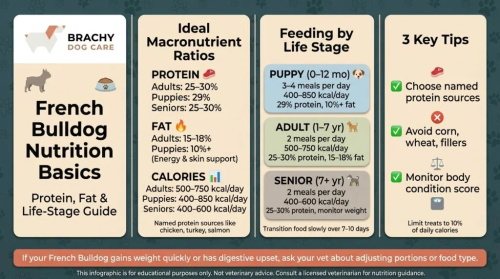
Of course, exceptions exist. Brachycephalic breeds (such as English Bulldogs and Pugs) may benefit from specially shaped kibble designed to slow eating and reduce vomiting risk. However, this applies only to a limited number of cases and cannot be generalized to all breed-specific formulas.
More importantly, individual variation within the same breed is often greater than differences between breeds. Within a litter of Golden Retrievers, one may run five kilometers a day, another may be overweight, and another may have a sensitive stomach. Feeding all of them the same “Golden Retriever formula” is logically no more precise than choosing “high activity,” “sensitive stomach,” or “weight management” diets individually.
There is also a frequently overlooked category: mixed-breed dogs. They represent a large proportion of the global dog population yet have no “breed-specific formula.” If breed-specific food were truly indispensable, all mixed-breed dog owners would face uncertainty—but in reality, most mixed-breed dogs thrive on high-quality standard food selected by body size.
3. Ingredient Lists Don’t Lie: Paying 3x More for What Exactly?
According to a 2024 review by Dogs Naturally Magazine of Royal Canin breed-specific dry food, the Jack Russell Terrier Adult formula lists ingredients such as brewers rice, chicken by-product meal, wheat gluten, wheat, and corn.
The review gave the breed-specific dry food line an overall score of 1.2/10 (out of 10), citing issues such as high carbohydrate content, excessive synthetic vitamin and mineral supplementation, plant-based protein fillers, unspecified animal protein sources, and nutrient degradation due to high-temperature processing.
Specifically, corn gluten meal and wheat bran are common plant protein fillers used to artificially raise total protein values on labels, but they have lower biological value compared to animal protein. Powdered cellulose (often derived from wood pulp), which provides non-nutritive fiber, is also found in multiple formulas. “Vegetable oil” and “fish oil” are often not specified by source, making it impossible to evaluate omega-3 to omega-6 ratios—yet AAFCO standards allow ratios as high as 30:1, which may promote inflammation.
In contrast, standard premium dog foods that list clearly named meat sources (such as “deboned chicken” instead of “poultry by-product”) and contain fewer plant protein fillers may actually offer higher nutritional quality.
So where does the 300% price premium go? According to a 2025 industry analysis by Pet Treats Machine, the pet food industry’s overall profit margin typically ranges from 5% to 20%. However, premium and specialty products (including breed-specific formulas) maintain higher margins due to differentiation strategies.
Standard dry food margins are around 25–35%, while premium/specialty formulas can reach 35–45%. Since raw materials account for 70–80% of operating costs, the actual cost difference between formulas is minimal. The majority of the price premium is converted into brand profit and marketing expenditure.
4. Real Voices: Forums, Social Media, and Pet Store Counters
On Reddit communities such as r/dogs and r/puppy101, “what food do you feed” is a frequently discussed topic. Breed-specific food has strong visibility in these discussions, but opinions are divided—some users believe “the investment is worth it for the health benefits,” while others argue “the price point can be higher than other brands, so it may not be suitable for all budgets.”
More critical perspectives appear in specialized forums. On Your Pet Forum, a long-running UK pet forum, a user named CollieSlave wrote after reviewing Royal Canin Medium Adult:
“Only rated 1.8/5, contains large amounts of wheat and corn. Uses ingredient splitting like ‘corn, corn flour, wheat, wheat flour’ to make grains appear less dominant. Price £52.99/15kg, nearly double Bakers, and as expensive as many genuinely better foods. Fancy names and high prices make buyers think they are purchasing premium products.”
Another user, alfiemummy, shared her experience after winning a bag of Royal Canin Cocker Spaniel food:
“Found it very greasy, didn’t like the smell. Ingredients are not ideal, only used it as treats.”
More telling is an observation from a user claiming to work in a pet store, smilesbetter:
“We sell this; the product itself is average, but they have many breed-specific lines, so new pet owners buy it because no other brand offers breed-specific food. Customers who care about ingredients buy other brands, those who don’t care buy Pedigree, and those who think expensive equals good but don’t check ingredients buy Royal Canin.”
On the Lemon8 platform, user @bborden2024 shared a real-world experience feeding Royal Canin breed-specific food to a Cocker mix: improved bowel movements, reduced gas, and shinier coat. However, she also admitted that a 6 lb bag costs $35 and needs replacement every three weeks, making it significantly more expensive than previous food. Her conclusion was that benefits are visible, but the cost is ongoing and substantial.
In Indian pet communities (from Delhi Facebook groups to Reddit r/DogCareIndia), discussions show even clearer polarization. A 2026 comparison of Kukky vs Drools vs Royal Canin noted:
“Long-term Royal Canin users, especially those feeding therapeutic formulas, remain loyal due to effectiveness in specific medical contexts. However, more pet owners are questioning whether a healthy adult dog really needs food costing ₹700 per kg with corn gluten listed among the first ingredients.”
5. Economic Perspective: Why Brands Love “Breed Segmentation”
From a business standpoint, breed-specific food is a classic market segmentation strategy. It transforms a simple decision framework—based on “size + life stage”—into a complex matrix of dozens of SKUs. Each SKU corresponds to an identity label: “I am a responsible German Shepherd owner,” or “I chose a professional formula for my French Bulldog.”
The psychological foundation behind this is “precision bias”: people tend to believe that more finely segmented solutions are more scientific and professional, even when the segmentation criteria are not necessarily valid.
The pet industry understands this well. When a bag is labeled “Golden Retriever Adult” instead of “Large Breed Adult,” it is no longer selling protein percentages—it is selling emotional reassurance and identity value.
Breed-specific food also creates path dependency. Once a pet owner starts feeding “Golden Retriever formula,” it becomes difficult to switch back to “regular large breed food,” because doing so implies that the previous choice may not have been optimal. This psychological lock-in is more valuable than any proprietary formula.
6. Failure Cases and Ambiguous Outcomes: When “Specialized” Becomes a Cognitive Trap
Not all experiences with breed-specific food are clearly positive or negative. Most outcomes are mixed and uncertain.
A boxer dog owner in Sydney described on a pet forum that her dog suffered intermittent diarrhea for months. She insisted on feeding a “Boxer Adult” formula for eight months, believing “it is designed for boxers, so it must be suitable.” During this time, she only tried different flavors within the same brand and never considered switching food or conducting intolerance testing. Eventually, a veterinarian diagnosed sensitivity to a common filler ingredient, and symptoms improved after switching food. She later realized that starting with a simpler formula might have avoided months of trial and error.
Similarly, @bborden2024’s case shows mixed results: improved digestion and coat condition, but no clear evidence that improvements came specifically from the “breed-specific” aspect rather than switching to a generally higher-quality brand. Her previous food was Purina Pro Plan: Sensitive Stomach, which is already a mid-tier product, not a low-quality diet.
The common issue in these cases is that the effect of breed-specific food is difficult to isolate from the effect of switching diets altogether or improved owner attention. Without controlled trials, individual observations cannot serve as scientific evidence.
7. Practical Guide: How to Escape the “Breed Tax”
If you find yourself confused in front of the pet food shelf, here is a rational decision framework based on current evidence:
Step 1: Filter by body size and life stage
Small, medium, large × puppy, adult, senior. This is the most scientifically supported classification system. Large-breed puppies require controlled calcium-to-phosphorus ratios—any food meeting AAFCO or FEDIAF standards for large-breed puppies is sufficient, whether or not it is labeled “German Shepherd Puppy” or “Golden Retriever Puppy.”
Step 2: Read the first five ingredients
Look for clearly named animal protein sources (e.g., “deboned chicken” is preferable to “poultry by-product” or “chicken by-product meal”). Be cautious of plant protein fillers (corn gluten meal, pea protein, wheat gluten) and vague fat sources (“animal fat” or “vegetable oil”). If more than three grain or filler ingredients appear in the first five items, nutritional density is questionable regardless of branding.
Step 3: Check guaranteed analysis
Ensure crude protein, crude fat, crude fiber, and moisture meet AAFCO standards. For healthy adult dogs, 25–35% dry matter protein is typically sufficient. Higher protein is not necessarily better and may place stress on kidneys in older dogs.
When might breed-specific food make sense?
- Brachycephalic breeds requiring special kibble design (to reduce fast eating and vomiting)
- As a temporary starting point for completely inexperienced pet owners
- Veterinary recommendation based on specific clinical indicators (note: this is closer to prescription diets than commercial breed formulas)
A simple alternative mindset
If your dog were a mixed breed, how would you choose? That answer—based on body size, activity level, and health status—is often the correct approach. Breed-specific food is not a scam, but it is an over-packaged intermediate option. For most healthy dogs, a transparent, balanced, size-appropriate premium diet is sufficient.
Conclusion
Your dog does not know what breed it is. It only knows whether the food in its bowl tastes good, whether its stomach feels comfortable afterward, and whether it has energy to run. These three things have far less to do with the label on the bag than most owners assume.
The premium attached to breed-specific food does not necessarily buy better nutrition—it buys a carefully engineered sense of reassurance. Truly “caring for your dog” means understanding it as an individual: its weight, activity level, and health profile—not as a consumer of a breed identity label.
Frequently Asked Questions
1. Can I mix regular dog food with breed-specific formulas?
Yes, you can. Just make sure the total diet meets nutritional requirements and transitions gradually over 7–10 days to avoid stomach upset.
2. How do I know if my dog actually benefits from premium breed food?
Look for observable changes in digestion, coat quality, energy levels, and overall health—but remember, improvements may come from switching brands or better feeding habits, not the breed-specific formula itself.
3. Are there cases where breed-specific kibble is genuinely useful?
Yes, a few:
- Brachycephalic dogs (like Pugs or Bulldogs) may benefit from special kibble shapes to slow eating.
- Dogs with specific veterinary recommendations or medical needs.
References
- Association of American Feed Control Officials (AAFCO). (2024). Official publication: Pet food labeling and nutritional standards. AAFCO Press.
- Dog Aging Project Consortium. (2023). Diet quality, lifespan, and health outcomes in companion dogs. Frontiers in Veterinary Science.
- Journal of Animal Physiology and Animal Nutrition. (2023). Breed and body size effects on nutrient digestibility in domestic dogs.
- European Pet Food Industry Federation (FEDIAF). (2023). Nutritional guidelines for complete and complementary pet food for cats and dogs.
- Mars, Incorporated. (2025). Petcare manufacturing expansion and innovation investment report. Corporate sustainability disclosure.
- Dogs Naturally Magazine. (2024). Independent analysis of breed-specific dry dog food formulations.
- Pet Treats Machine. (2025). Global pet food market margin and segmentation report.
About the Author
Scarlett Hayes is an independent writer and market trends analyst covering emerging consumer behaviors, niche industries, and economic shifts. Her work explores how changing technologies, cultural preferences, and business models create new opportunities across consumer markets and everyday life.
She focuses on identifying overlooked trends, untapped markets, and the economic forces shaping future consumer and workplace experiences.
Disclaimer
This article is for informational and educational purposes only and does not constitute veterinary advice.