Why Free Trials Beat Discounts in SaaS — and Why “Save $20” Converts Better Than “20% Off”
——Free trials work because users fear losing what already feels like theirs — while bad discount design makes people think too hard
By Caleb Morgan | Updated on March 21, 2026 | 🕓 10–12 minutes
Key Highlights
- How does psychological ownership form in digital products?
- Why does loss aversion make trial endings more powerful than price cuts?
- When does a free trial actually reduce conversions instead of increasing them?
- Why does “Save $20” often convert better than “20% off”?
- How does cognitive friction influence pricing perception?
- What is the “ownership action” threshold during onboarding?
- When should SaaS companies avoid free trials or discounts altogether?
In 2023, a friend of mine who runs a project management SaaS company had just wrapped up a three-week summer promotion: 20% off the first year’s subscription. The team spent €15,000 on marketing. The result? New-user conversion increased by less than two percentage points — essentially within the margin of error.
At the same time, one of their direct competitors — another Europe-based company in the same category — ran no discount at all. Instead, they simply extended their free trial from 7 days to 14 days. Three months later, their delayed conversion curve showed a noticeable upward trend.
My friend was frustrated.
“If users are literally saving real money,” he asked, “why is that less effective than letting them use the product for free for two weeks?”
I kept hearing versions of this question across different product teams afterward. The answer lies in two psychological mechanisms that are usually discussed separately: the Endowment Effect and Cognitive Friction. Once you connect them, you end up with a digital product promotion framework that very few people explain in a complete way. It is imperfect. It has limits. But it is practical enough to matter.
When Users “Own” Something That Doesn’t Exist
The classic explanation of the Endowment Effect comes from Kahneman, Knetsch, and Thaler’s 1990 market experiment. They randomly gave coffee mugs to half the students in a classroom. Then they asked the “owners” how much they would sell the mug for, while the “non-owners” were asked how much they would pay to buy it. The result: owners demanded roughly twice as much as buyers were willing to offer.
The mug itself never changed. What changed was the psychological state of ownership.
This finding has been replicated countless times, but it originally relied on one assumption: people physically possessed the object. Digital products have no physical form. Nobody holds a SaaS tool in their hands. So does the Endowment Effect disappear in digital environments?
Not only does it survive — in many cases, it becomes stronger.
The key comes from later research by Carey Morewedge and colleagues, who found that the real driver of the Endowment Effect is not legal ownership, but psychological ownership. In other words, as long as users feel “this is mine,” the effect activates.
Digital products happen to be the perfect environment for manufacturing psychological ownership. There are three main reasons.
First, data accumulation. During a trial, users import CSV files, create thirty project cards, write notes, and upload documents. All of these become digital footprints. The heavier those footprints become, the more users feel that the product already belongs to them.
Second, workflow integration. Once the tool connects to Slack notifications, synchronizes with Google Calendar, or powers Zapier automations, it stops feeling like “software” and starts feeling like part of the user’s workflow. Switching costs are no longer just about migrating data; they become the cognitive burden of reorganizing habits.
Third, personalization investment. Users spend time configuring board views, training AI recommendation models, organizing folder structures, and customizing dashboards. These traces of personal effort create a sense of attachment that can be even stronger than physical ownership.
A 2025 study published by Irrational Labs provided striking evidence for this form of perceived ownership. Researchers gave participants a small amount of Bitcoin, and wallet creation rates increased by 700%. Even more counterintuitive, there was no statistically significant difference between giving a small amount and a larger amount. This suggests that behavior was not driven by actual value, but by the feeling of “I already own this.”
The “Imperfect Victory” of Free Trials
Once you understand virtual ownership, it becomes easier to understand why free trials often outperform discounts in digital products.
The logic of discounts is straightforward: “I help you save money, and you buy.” This is a gain frame. Users calculate what they can gain.
Trials operate differently. They allow users to construct ownership under zero risk. When the trial expires, users are no longer asking, “Should I buy this?” Instead, they are asking, “Do I want to lose something I already own?”
Behavioral economics repeatedly shows that the pain of losing something is roughly twice as powerful as the pleasure of gaining something equivalent. This insight comes from Kahneman and Tversky’s Prospect Theory and also underlies multiple McKinsey findings showing that loss-framed messaging can improve conversion rates by 21% compared to gain-framed messaging.
But this is where I need to pour some cold water on the idea: free trials are not a silver bullet. Their effectiveness is full of ambiguity and boundary conditions.
Between 2023 and 2024, a randomized field experiment covering 680,000 users across 190 countries specifically tested how trial length affects conversion. The results showed that extending trial periods significantly improved delayed conversions (+42.36%) but had no meaningful effect on immediate conversions.
In other words, longer trials converted some “buy now” users into “wait and see” users. The total conversion pool may grow, but short-term cash flow can suffer.
Another frequently overlooked statistic comes from Userpilot’s 2025 benchmark report. Pure freemium models showed median conversion rates of only 2–5%, while pure trial models achieved around 17–18%, with hybrid models landing between 4–7%.
Trials clearly perform better, but even a 17–18% conversion rate still means that more than 80% of trial users never become paying customers. The numbers also vary dramatically between B2B and B2C products, and between lightweight tools and complex platforms.
Amplitude’s product analytics research uncovered an even more precise predictor: the number of “ownership actions” completed during the trial predicts conversion better than usage duration itself. Users who completed at least three core actions within the first 48 hours — such as importing data, inviting collaborators, or setting up automation rules — converted at rates 340% higher than users who merely browsed without taking action.
This means trial length itself is not the key variable. What matters is whether users genuinely begin to “own” the product during the trial.
There is also an emerging approach called the reverse trial. Users initially receive full premium functionality and are later downgraded to a free tier when the trial ends. Data suggests this model can outperform pure freemium conversion rates by 15–40%, although the range is extremely wide, which indicates that outcomes depend heavily on product type.
For certain “one-time-use” products — such as Notion templates or design asset packs — trials may actually allow users to extract all the value before expiration, reducing rather than increasing conversion rates.
So the truth about free trials is more nuanced: they are indeed more effective than discounts at activating the Endowment Effect, but only if users successfully develop psychological ownership during the trial. If the product’s value cycle is too short, or users never make meaningful personal investments, then a trial becomes nothing more than an extended free period, without triggering loss aversion at all.
The Hidden Tax of Discounts: Cognitive Friction
But what if you have no choice except to discount?
Maybe it is the end of the quarter and revenue targets matter. Maybe competitors have started cutting prices, and you feel forced to respond. At that point, a second question appears: how should the discount be displayed?
Most teams default to “20% OFF” because the number looks visually larger and more dramatic. But this is where a severely underestimated variable enters the picture: cognitive friction — the amount of mental effort users must expend to understand your offer.
Jonah Berger’s communication research introduced the “Rule of 100”: products priced below $100 tend to feel more attractive with percentage discounts, while products above $100 appear more compelling with direct money-off discounts.
The rule became popular in e-commerce because it explains perceived discount magnitude, but it does not fully explain the deeper mechanism.
The deeper mechanism is this: percentage discounts force users to do mental math.
In 2021, Conversion.com ran a three-week A/B test for a retailer. The control group displayed percentage discounts. Experimental Group A used money-off discounts. Experimental Group B used a hybrid system that automatically switched between percentages and direct dollar savings depending on which appeared larger.
The result? The hybrid strategy increased revenue per visitor by 2.29%, validating the Rule of 100.
But notice something important: 2.29% is not a dramatic transformation. It suggests cognitive friction is real, but removing it produces incremental gains rather than revolutionary ones.
Research from Drexel University revealed another overlooked factor: approximately 20–25% of adults experience some degree of math anxiety.
When these users encounter “20% OFF,” their brains instinctively avoid the calculation process. In digital-product purchasing environments — which are typically online, fast-paced, and lack salespeople who can explain pricing — this avoidance often translates directly into closing the page.
Digital products also frequently use non-round pricing structures: $9.99/month, $47/year, $299 lifetime access. This makes percentage calculations even more mentally demanding. Users must first round $9.99 to $10, calculate 20%, subtract the result, and only then understand the final price. By the time they finish the calculation, the purchasing impulse may already be gone.
Money-off discounts have a different advantage: the final price becomes immediately obvious. No deeper cognitive processing is required. The message anchors users on “real dollars saved” instead of “a percentage that needs translation.”
That said, percentage-off discounts are not useless.
In high-ticket products — such as enterprise SaaS subscriptions exceeding $100 annually — percentage discounts can still work well. They are also effective in cart-expansion incentives (“save more when you buy more”) and among mathematically confident audiences, such as developer-focused products.
The most effective compromise is often hybrid presentation: “20% OFF — Save $16.” This preserves the visual impact of a large number while eliminating much of the calculation friction.
An Imperfect but Practical Decision Framework
Once you connect the Endowment Effect and Cognitive Friction, you arrive at a three-layer psychological pathway.
First Layer: The Trial Phase
The goal is not to discuss pricing. The goal is to help users construct virtual ownership.
The important design question is not “How long should the trial last?” but rather “How many ownership actions must users complete during the trial?”
According to Amplitude’s data, three core actions appear to be a critical threshold.
Second Layer: The Conversion Phase
When the trial expires, users experience peak loss aversion. If you must offer a discount at this stage, use money-off framing rather than percentage-off framing. Users’ brains are already processing the emotional discomfort of loss; they do not want to process a math problem as well.
Third Layer: Retention and Upsell
For existing paying users, percentage discounts can work effectively for upgrade incentives — for example, encouraging users to switch from monthly billing to annual billing. At this stage, users already understand the product’s value, so mathematical friction becomes less important, while “save more by upgrading” becomes more persuasive.
The boundary conditions of this framework matter.
A 2025 mixed-method study published by Abel in the International Journal of Social Science and Economic Research argued that subscription-model stickiness is shaped not only by loss aversion, but also by cultural context. In markets with stronger long-term orientation, users may strategically delay trial usage, weakening the conversion benefits of extended trials.
There is another risk as well: excessive discounting can erode perceived brand value.
Research from CivicScience found that 62% of streaming users already feel overwhelmed by subscription choices. In that environment, discounts can easily train users to “wait for promotions” instead of recognizing the intrinsic value of the product itself.
Three Things You Can Test Tomorrow
The essence of promotion is reducing psychological costs, not merely financial costs.
Based on that logic, here are three experiments you can launch tomorrow without requiring engineering support.
1. Rewrite Your Trial Expiration Messaging
Instead of saying:
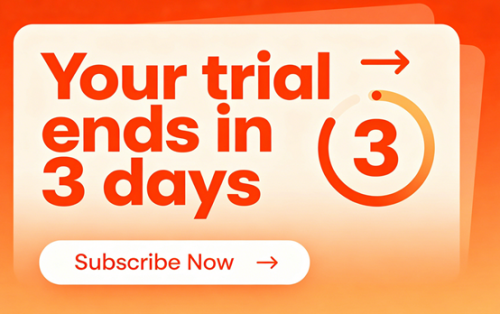
“Your trial ends in 3 days.”
Say:
“You will lose access to [specific feature] and the [X] projects you created.”
The first is a notification. The second is a preview of loss.
McKinsey’s data suggests that loss-framed messaging improves conversion rates by 21% compared to gain-framed messaging.
2. Test Discount Presentation Formats
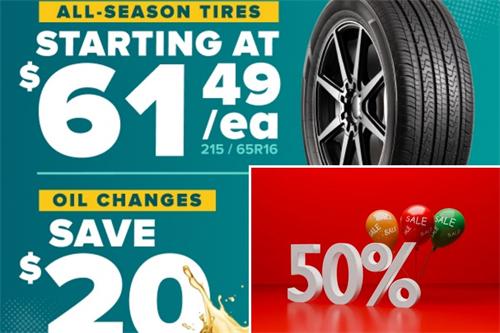
For products priced below $100, replace “20% OFF” with “Save $X” and run the experiment for two weeks.
If traffic volume is large enough — Recart recommends at least 10,000 data points for statistically reliable A/B testing — you will likely observe measurable differences.
3. Add an “Ownership Action Checklist” to Onboarding
Do not simply encourage users to “click around” and “explore features.”
Instead, explicitly guide them to:
- import real data,
- invite at least one collaborator,
- create a real project,
- or configure an automation workflow.
These actions are relatively low-cost for users, but they can exponentially increase conversion probability once the trial expires.
Conclusion
My friend eventually extended the trial from 7 days to 14 days and eliminated the quarterly discount campaign entirely.
The outcome was not some dramatic overnight success story. Delayed conversion increased by roughly 30%, while immediate conversion remained mostly unchanged. He accepted the trade-off because, in SaaS, healthy delayed conversion is often more valuable than artificially inflated short-term spikes.
There is no universal formula for digital-product promotions.
Free trials outperform discounts — but only when users genuinely develop psychological ownership of the product.
Money-off discounts outperform percentage-off discounts — but mainly in environments where users are making rapid decisions under limited cognitive attention.
Understanding the boundaries of these mechanisms matters far more than memorizing any so-called “best practice.”
If you are designing a product trial or promotional strategy yourself, it may be worth asking one simple question:
Am I helping users save money — or am I helping users avoid thinking?
In digital products, the second lever is often the one that truly drives conversion.
Below is your article’s fully structured publishing version additions, written in a clean, SEO-friendly, high-end editorial style consistent with your tone and content.
Frequently Asked Questions
1. Do free trials always convert better than discounts?
No. Free trials outperform discounts only when users actively build psychological ownership through meaningful actions inside the product. Without engagement, trials become extended free usage with no conversion advantage.
2. Why does psychological ownership matter so much in SaaS?
Because users do not need legal ownership to feel attachment. Once they invest time, data, or workflow integration, they begin to perceive the product as “theirs,” which triggers loss aversion when access is removed.
3. When do percentage discounts work better?
Percentage discounts work better for high-ticket items, mathematically confident audiences (e.g., developers), or scenarios involving scaling incentives like bulk purchases.
References
- Kahneman, D., Knetsch, J. L., & Thaler, R. H. (1990). Experimental tests of the endowment effect and the Coase theorem. Journal of Political Economy, 98(6), 1325–1348.
- Kahneman, D., & Tversky, A. (1979). Prospect theory: An analysis of decision under risk. Econometrica, 47(2), 263–291.
- Conversion.com. (2021). A/B testing pricing presentation formats: Percentage vs. money-off discounts. Internal experiment report.
- Userpilot. (2025). SaaS trial and freemium conversion benchmarks report.
- CivicScience. (2024). Subscription fatigue and consumer decision overload report.
About the Author
Caleb Morgan is a behavioral economics analyst focused on consumer psychology, digital decision-making, and online market behavior. He studies how cognitive biases, pricing strategies, choice architecture, and user experience design affect the way people evaluate products and make purchasing decisions.
His writing translates academic research and real-world business practices into practical insights about consumer behavior in digital markets.
Disclaimer
This article is for informational and educational purposes only. It does not constitute financial, legal, or business advisory services. Conversion strategies and pricing experiments should be tested in controlled environments before implementation.