Why Frugal Consumers Are Your Most Profitable Segment: The 14.7-Touchpoint Journey Explained
——New data from 13,000+ global consumers reveals why frugal buyers generate higher lifetime value than impulse shoppers.
By Henry Lawson | Updated on May 10, 2026 | 🕓 12 minutes
Key Highlights
- What does the “14.7-touchpoint journey” actually reveal about consumer psychology?
- Why are many high-income households becoming more value-conscious instead of more luxurious?
- Why do frugal consumers tend to show stronger loyalty once they commit to a brand?
- How can businesses lower customer acquisition costs by targeting research-driven buyers?
- Why are Reddit, YouTube reviews, and AI comparison tools becoming critical trust channels?
- What makes loyalty programs succeed or fail with value-focused consumers?
I know someone who runs an independent coffee roastery in Manchester. Last year, a customer named Elena walked into her shop, ordered the most basic flat white, and then sat in the corner for nearly forty minutes comparing prices, origin certifications, and Reddit reviews for the store’s coffee beans against three competing brands.
In the end, she bought only one 250-gram bag of blended beans. She used a 10% newsletter signup code and even asked whether she could get £1 off next time by bringing her own reusable cup.
Three months later, Elena came back.
This time, she purchased two bags of single-origin beans and a pour-over kettle, and recommended the shop to three colleagues who came with her.
A year later, she had become a subscription member placing automatic orders every two weeks, and she even shared the brand in the group announcement board for her running club.
Hidden inside this story is a counterintuitive truth:
The consumers who seem the most demanding, the most meticulous, and the hardest to satisfy are often the most beautiful numbers on your profit statement.
Who Are “Frugal Consumers,” Really?
First, we need to dismantle a deeply rooted misconception:
Frugality does not equal poverty.
According to the 2026 Global Consumer Outlook survey conducted by AlixPartners between September and November 2025 across nine countries with 13,115 consumers, signs of spending restraint are increasingly appearing among higher-income groups. Researchers described this shift not as a cyclical economic downturn, but as a “structural reset of value.”
In the U.S. market, AMRA & ELMA’s aggregated analysis of 2025 consumer marketing data found that 67% of self-identified “frugal consumers” came from middle- and upper-middle-income households earning over $75,000 annually. In the $150,000–$250,000 income bracket, this segment was growing at an annual rate of 23%.
Even more interestingly, among households earning over $200,000 annually, 72% were actively practicing frugal consumption habits.
This introduces a concept that marketing researchers have only begun taking seriously in recent years:
Stealth Wealth.
These consumers can afford premium pricing, but they refuse to pay unnecessary brand markups.
They are not unable to buy.
They simply do not want to buy incorrectly.
This consumption philosophy is detached from income level but deeply tied to decision-making style.
The 14.7 Touchpoints: A Number That Deserves Honesty
Now let’s talk about that number.
According to AMRA & ELMA’s aggregated observations of 2025 digital consumer behavior, frugal consumers averaged 14.7 research touchpoints before making purchases over $50, and 78% used AI-powered price comparison tools during the process.
This figure is frequently attributed to Google Consumer Insights reports, but I need to make an important disclosure here:
I searched Google’s official consumer insights report archives and could not find a publicly released primary research paper containing this exact statistic.
The “14.7” figure appears to come from aggregated industry estimates and extrapolations rather than from a single transparent academic study with publicly accessible methodology.
An independent 2025 survey by Impact.com of 1,000 U.S. adults provides another perspective:
ordinary consumers typically interact with a brand through digital channels at least three times before purchasing, while among households earning over $250,000 annually, that number jumps to more than five interactions.
Honestly, I do not think anyone should obsess over whether the number is precisely “14.7.”
Different industries and cultural contexts will inevitably produce different touchpoint counts.
What actually matters is the behavioral pattern behind the number:
Frugal consumers have extremely long decision chains and exceptionally deep information-search behavior. That means once they finally make a decision, their switching costs become extremely high.
From a behavioral economics perspective, this aligns with Cognitive Dissonance Theory.
When someone invests substantial time and mental effort researching and justifying a purchase decision, they instinctively defend that decision afterward in order to validate the time they spent making it.
That psychological mechanism translates directly into stronger brand loyalty and lower churn rates.
Why Is Their Customer Lifetime Value (CLV) Higher?
A 2025 study from the Wharton School at the University of Pennsylvania noted that improving customer retention by just 5% can increase profitability by 25% or more.
Meanwhile, real-world telecom industry datasets confirmed a strong linear relationship between retention rate and CLV, with retention exerting a far greater impact on customer lifetime value than one-time transaction profit.
Once you apply these findings to frugal consumers, the logic becomes remarkably clear.
First, Their Customer Acquisition Cost (CAC) Is Lower
People like Elena often find you on their own.
You do not need enormous advertising budgets interrupting their attention spans.
What they need is to “discover” you in AI search overviews, Reddit discussions, YouTube review ecosystems, and long-form comparison content.
EY’s 2025 Loyalty Market Study, based on 1,600 consumers and 350 loyalty-program executives, found that 92% of consumers belong to at least one loyalty program, and more than half use those programs weekly.
That means once your brand enters their “consideration set,” maintaining the relationship becomes far cheaper than continuously acquiring new customers.
Second, Their Retention Rate Is Higher
Deloitte’s Consumer Loyalty Program Survey, conducted between September and October 2025 with 5,564 adult loyalty-program members in the United States, found that 72% of respondents said loyalty programs made them more likely to purchase from preferred brands, while 56% reported increased spending as a result.
But there is an easily overlooked detail:
The average consumer enrolls in eight loyalty programs but remains actively engaged in only five of them.
Frugal consumers may be selective and demanding, but once they choose you, their engagement depth and emotional commitment are often significantly stronger.
Third, Their Service Costs Are Lower
Frugal consumers are usually self-service experts.
AMRA & ELMA’s aggregated data suggests that:
- 82% use shopping lists
- 67% use budgeting apps
- 71% apply a “24-hour cooling-off rule” for purchases over $50
They rarely impulse-buy and then return items.
They rarely contact customer support because they “bought the wrong thing.”
Their research comes first.
Their problems come later—if at all.
Real Global Case Studies: None of Them Are Perfect Fairy Tales
If you are expecting a simplistic “Brand X did Y and profits exploded” success story template, you may be disappointed.
Real-world business outcomes are messy, contradictory, and uncertain.
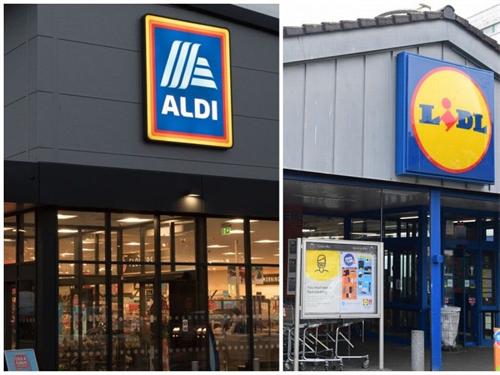
Let’s begin with the German discount supermarket giants Aldi and Lidl.
In the United Kingdom, Aldi currently holds 11.1% grocery market share, while Lidl holds 8.1%, and both achieved sales growth during 2025.
But the story has not been smooth.
A January 2023 report from the UK Customer Satisfaction Index (UKCSI) showed that while Aldi achieved 24% sales growth in 2022 and reached a record 9.3% market share, profits simultaneously declined due to supplier costs, labor expenses, and pandemic-related spending.
By 2024, conditions had shifted again.
Aldi’s annual growth rate slowed to 2.2%, and its market share slipped slightly from 10.1% to 10.0%.
Lidl, meanwhile, leveraged personalized discounts through its loyalty app—particularly in bakery categories, where sales growth exceeded 40%—to achieve the fastest growth for nine consecutive months, lifting its market share to 8.1%.
Aldi even mocked loyalty programs on social media and still has not launched its own loyalty app.
Whether that decision is strategically brilliant or strategically disastrous remains unresolved.
Crossing the Atlantic makes the picture even more complicated.
Aldi in the United States generates roughly $27 billion in annual sales with approximately 2.1% market share, and 63% of consumers say they would feel disappointed if local stores closed.
Lidl, however, ranks only 45th in the U.S. grocery market, with around 0.3% market share and approximately $4.5 billion in annual sales, while still struggling to expand.
The same discount DNA.
The same frugal customer base.
Completely different outcomes across markets.
That reality demonstrates an important truth:
There is no universal formula for reaching frugal consumers. Local culture and execution details can dramatically amplify—or dilute—the effectiveness of a strategy.
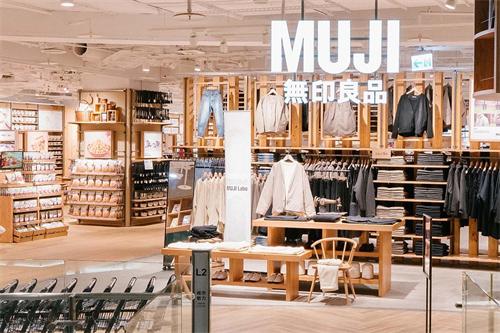
Now consider Japan’s MUJI.
A joint case study from the World Bank and the International Finance Corporation found that MUJI’s highly loyal customers spend more per transaction and are more likely to recommend the brand to others.
Yet qualitative interviews revealed an awkward reality:
Many weekly shoppers did not even realize which products belonged to the company’s “ethical sourcing” line, while others openly complained, “I wish the prices were lower.”
MUJI’s Passport App successfully increased in-store spending by 46%, yet the company was still forced to shut down parts of its Singapore e-commerce operation.
Loyalty and profitability have never been perfectly linear.
Southeast Asia provides another warning sign.
Shopify’s 2024 report on Southeast Asian retail ecosystems found that:
- 83% of consumers were actively cutting spending to save money
- 96% said they would remain loyal if brands provided incentives
- Yet simultaneously, 98% had already purchased from alternative brands
- And 67% switched brands because of better pricing or discounts
Frugal consumer loyalty exists.
But it is extraordinarily fragile.
The moment the value narrative breaks, they will leave without hesitation.
If I Were You, Here’s What I Would Do
The following suggestions are based on observed data patterns and case-study trends, but your industry, pricing structure, and regional market conditions may be entirely different.
Treat these as starting points for thinking—not operational manuals.
First, Stop Defining Value as “Cheap”
Frugal consumers are not looking for the lowest-priced product.
They are looking for the product least likely to make them feel foolish later.
If your product pages emphasize discounts alone, you will attract bargain hunters rather than value-aligned customers.
Show total cost of ownership (TCO) instead.
A $300 coffee machine that lasts ten years costs roughly $0.08 per use.
An $80 alternative may fail within two years.
Second, Exist During the Research Phase—Not Just the Purchase Phase
This means your brand needs authentic presence inside:
- AI comparison tools
- Reddit communities
- YouTube review ecosystems
- Long-form educational content
Not through aggressive advertisements, but through genuinely referenceable information:
- Transparent ingredient lists
- Third-party certifications
- Clear pricing histories
- Honest durability explanations
Impact.com’s research already indicates that higher-income consumers experience significantly more touchpoints.
Your information across those touchpoints must remain consistent.
Third, Design a “Cooling-Off-Friendly” Buying Experience
Seventy-one percent of frugal consumers apply a 24-hour rule for purchases above $50.
Give them reasons not to purchase immediately:
- Saved shopping carts
- Price-drop alerts
- Follow-up emails saying:
“Still considering it? Here’s a long-term cost comparison.”
Do not pressure immediate conversion.
That pressure often drives them away.
Fourth, Make Loyalty Programs Feel Dignified
Deloitte’s survey of 5,564 consumers showed that people enroll in an average of eight loyalty programs but actively use only five.
If your program cannot deliver visible value within two weeks, it will be forgotten.
Frugal consumers especially dislike systems that manipulate them into unnecessary spending “for points.”
Give them control:
- Let them choose rewards
- Show real-time progress
- Offer immediate value in exchange for feedback
EY’s research suggests these are precisely the features consumers across age groups actually want.
Fifth, Accept Ambiguity
Aldi’s success in the UK could not be cleanly replicated in the United States.
Lidl’s efficient German supply chain became unexpectedly clumsy in the American market.
MUJI’s strong loyalty in Japan could not save its Singapore e-commerce business.
Frugal consumers may be the most profitable segment—but only under certain conditions.
Your product quality, supply-chain efficiency, and local market understanding must all be strong enough to support the relationship.
Otherwise, they are simply the most demanding temporary visitors you will ever encounter.
Final Thoughts
The reason frugal consumers have such long purchasing journeys is that they are constructing an internal narrative:
“Can this brand truly be trusted?”
And once that narrative is complete, its defensiveness becomes extremely powerful.
At the end of those 14.7 touchpoints, what waits for you is not a cheap customer.
It is someone who has already convinced themselves—and is now prepared to defend your brand to the rest of the world.
Frequently Asked Questions
1. Are frugal consumers the same as budget consumers?
Not necessarily. Many frugal consumers have high disposable incomes but intentionally avoid purchases they consider wasteful or unjustified. Their behavior is often driven by value optimization rather than financial limitation.
2. Does a longer purchase journey always lead to higher loyalty?
Not always. A long research process can increase loyalty if the product experience validates expectations. However, if the product disappoints the customer, the same research intensity can amplify frustration and distrust.
3. What industries benefit most from frugal consumer loyalty?
Industries with higher perceived risk or long-term ownership value tend to benefit the most, including electronics, appliances, specialty food and beverage brands, fitness equipment, travel gear, software subscriptions, and financial services.
References
1. Deloitte. (2025). Consumer Loyalty Program Survey. Deloitte Insights.
2. Impact.com. (2025). Consumer Purchasing Behavior Survey. Impact.com Research.
3. Kantar. (2025). UK Grocery Market Share Reports. Kantar Worldpanel.
4. Shopify. (2024). The Future of Retail in Southeast Asia. Shopify Research.
5. UK Customer Satisfaction Index. (2023). UKCSI January 2023 Report. Institute of Customer Service.
6. World Bank Group & International Finance Corporation. (2024). Consumer Loyalty and Ethical Retail Case Study: MUJI. World Bank Publications.
7. AMRA & ELMA. (2025). Aggregated Consumer Marketing and Frugality Trend Analysis. Industry Data Compilation Report.
About the Author
Henry Lawson is an independent analyst and writer focused on artificial intelligence, consumer behavior, and digital commerce. He studies how recommendation algorithms, personalization systems, AI assistants, and online platforms influence the way people discover products, evaluate information, and make purchasing decisions.
Disclaimer
This article is intended for informational and educational purposes only and does not constitute financial, legal, investment, or professional business advice.