Why Gen Z Consumers Increasingly Trust AI Over Brand Websites
— The real risk for brands is not losing clicks from Google—it is disappearing from the conversations where purchasing decisions now begin.
By Henry Lawson | Updated on May 20, 2026 | 🕓 11 minutes
Key Highlights
- What happens when AI never mentions your brand?
- How can AI hallucinations damage brand reputation and trust?
- Why are brand websites still important in the AI era?
- What is GEO (Generative Engine Optimization), and how is it different from SEO?
- Which industries are most vulnerable to AI-driven product discovery?
- How can companies improve their visibility inside AI conversations?
Recently, I overheard a conversation in a coffee shop. Two women in their early twenties were discussing which sunscreen to buy. One of them said, “I’ll ask ChatGPT first. Brand websites are basically ads anyway.” The other nodded and replied, “Exactly. Last time I asked it which hiking shoes to buy, it actually told me not to purchase a certain big brand’s new model because the sole becomes slippery in wet conditions. Then I searched Reddit, and people had actually fallen while wearing them.”
That conversation made me realize something important: the shopping journey for Gen Z has fundamentally changed.
They no longer open Google first, click through to your website, and finally browse your product page. Instead, they open ChatGPT first, receive what feels like a “neutral” answer, and then — if they even remember — visit your website for a quick verification.
The problem is: what happens if ChatGPT never mentions you at all?
I. This Is Not “Occasional Usage” — It Is a Behavioral Shift at Infrastructure Scale
In 2024, Capgemini Research Institute conducted a survey across 13 countries involving 10,000 consumers. The report, What Matters to Me: How Generative AI Is Shaping the Future of Shopping, found that 76% of Gen Z and younger Millennials trust answers generated by AI more than traditional Google search results.
Salesforce’s 2024 Connected Shoppers Report (based on 2,400 shoppers) found that 47% of Gen Z consumers discovered new brands through ChatGPT. Another independent Gen Z study showed that 23% of Gen Z consumers already trust AI product recommendations more than recommendations from other humans. That number may not sound enormous yet, but considering the speed at which AI recommendation systems are spreading, the slope of adoption is far steeper than most people realize.
But what impressed me most was not the percentages themselves. It was one behavioral detail: nearly 90% of Gen Z respondents said they use AI tools every single day.
That means AI is no longer a “backup option.” It has become default informational infrastructure — much like Google was for the previous generation.
II. Brand Websites Are Losing Their “First Position of Trust” — Not Because Their Content Is Bad, but Because Their Motivations Feel Suspicious
Here is a counterintuitive finding. Edelman’s 2025 Trust Barometer showed that Gen Z consumers report a 79% trust level toward brands they already use, but only 63% trust toward brands in general.
In other words, once people become your customers, they trust you.
The real problem is: how do they discover you in the first place?
If the answer is “through ChatGPT,” then your brand is already participating in an asymmetric trust game.
The “trust deficit” surrounding brand websites among Gen Z comes from three highly practical friction points.
First: information structure.
Of course your website says your product is excellent. Of course it filters reviews. Of course it hides negative feedback deep inside support pages or warranty documentation.
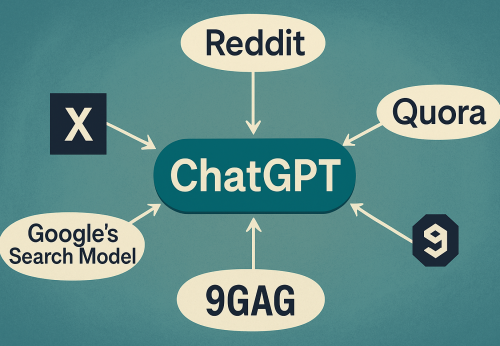
Meanwhile, ChatGPT synthesizes information from Reddit, Quora, professional reviews, and customer complaints. The result feels more complete.
Gen Z consumers are not naive. They understand AI can contain bias. But they often believe brand websites are even more biased.
Second: interaction experience.
63% of consumers abandon carts when forced to create accounts. Pop-ups, cookie banners, email subscription prompts, membership walls — marketing teams see these as “conversion funnels.” Users experience them as friction.
ChatGPT, by comparison, offers a nearly frictionless interaction: one question, one answer.
Third: cognitive load.
On a traditional website, consumers must compare specifications themselves, read reviews, evaluate authenticity, and decide what to trust.
AI performs much of that cognitive work on their behalf.
For a generation already overwhelmed by information overload, reducing decision fatigue becomes a form of value in itself.
III. The Real Cost Is Not Traffic Loss — It Is AI Hallucinations Rewriting Your Brand Narrative
In December 2024, Bain & Company and Dynata surveyed 1,117 consumers and found that roughly 80% relied on “zero-click results” for at least 40% of their searches — meaning AI-generated answers appeared directly on the search page, without users needing to click into any website.
Semrush and Datos tracked more than 200,000 keywords between January and October 2025 and found that the overall zero-click rate in the United States had reached 58.5%. On mobile devices, the number climbed to 77.2%.
Traffic decline is visible.
But the more dangerous problem is far more subtle:
When AI gets your brand wrong, you often have no appeal process, no correction mechanism, and no “delete” button.
In e-commerce, AI systems frequently confuse specifications and pricing between similar brands, accidentally steering customers toward competitors.
In SaaS, AI tools sometimes attribute fundraising news to similarly named rival companies.
In financial services, AI systems may generate outdated interest-rate information, causing consumers to make decisions based on expired terms.
Your brand may already be experiencing a form of “narrative drift” — where the positioning you spent a decade building is quietly being rewritten by an AI-generated summary.
And only 16% of brands are systematically monitoring how they appear inside AI search environments.
The remaining 84% are essentially flying blind.
IV. An Overlooked Paradox: Brand Websites Are Not Dead — Their Function Has Changed
Many people assume that AI search is “killing” brand websites.
The data does not fully support that conclusion.
In September 2025, Seer Interactive conducted a remarkably robust study tracking 3,119 search queries across 42 organizations and 25.1 million impressions.
The findings were surprising: when brands were cited inside Google AI Overviews, their organic click-through rates were actually 35% higher than competitors that were not cited. Paid click-through rates were 91% higher.
What does that mean?
Users are not behaving as though they “only trust AI.” Instead, they “ask AI first, then verify.”
In fact, 85% of users still conduct traditional searches after receiving AI-generated answers.
This means the role of the brand website is evolving.
It is no longer primarily the first destination for persuading consumers to buy.
It is becoming the place where consumers verify that the AI did not mislead them.
If your website cannot answer three questions within thirty seconds —
- Who are you?
- What do you do?
- Why should anyone trust you?
— then that verification traffic will disappear.
However, there is an important mixed outcome worth noting.
Kantar’s research found that 39% of consumers — and more than 50% of Gen Z — already use AI for product discovery. But this behavior is concentrated mainly in “search-oriented” categories: electronics, insurance products, and everyday consumer goods.
For products heavily dependent on sensory experience, physical interaction, or emotional resonance — such as luxury fashion, specialty coffee, or independent music — AI recommendation penetration remains lower than many expected.
That means:
Not every brand faces the same level of AI disruption.
If you sell specification-comparable products like consumer electronics, urgency matters.
If you sell experience-driven services, you still have a window of time — but that window is shrinking.
V. GEO: Not a Replacement for SEO, but Its Evolution
So what can brands actually do?
The answer is not “make your website prettier.”
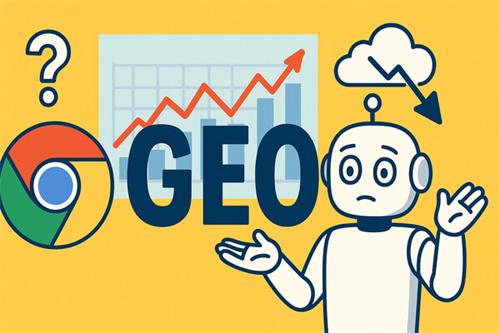
The answer is GEO: Generative Engine Optimization.
At the 2024 KDD conference, researchers from Princeton University and Georgia Tech published a paper titled GEO: Generative Engine Optimization. They tested nine optimization strategies designed to increase AI citation visibility.
Their findings were notable:
- Adding citations and sources increased AI visibility by 40%.
- Including relevant statistics increased visibility by approximately 30%.
- Using quotations increased visibility by 37%.
In 2025, Go Fish Digital conducted a self-experiment. After optimizing their GEO service pages, traffic from AI platforms such as ChatGPT increased by 43% within three months, while conversion rates increased by 83.33%.
Even more striking: leads referred through AI converted at 25 times the rate of traditional search traffic.
Why?
Because AI had already pre-qualified and psychologically endorsed the company before users arrived on the website. Visitors were no longer casually browsing. They arrived with a mindset closer to: “AI already suggested this company is credible.”
But to be completely honest, many of these case studies come from marketing agencies analyzing their own clients. Sample sizes and methodologies are not always fully transparent.
The Princeton study carries academic credibility, but real commercial environments are far more complex than controlled research settings.
GEO is not magic.
Its effectiveness varies significantly depending on industry, competition, and brand maturity.
VI. Four Practical Actions You Can Start This Week
Now that the theory is clear, here are four of the most practical GEO-related actions I have seen brands implement — without requiring major engineering resources.
1. Conduct an “AI Brand Audit” (30 Minutes)
Open ChatGPT, Perplexity, and Claude, and ask the following questions:
- “What are the best [your category] brands?”
- “[Your brand] vs [main competitor] — which is better?”
- “Is [your brand] trustworthy? What are common complaints?”
Document the responses carefully.
Does AI mention your brand at all?
How does it describe you?
Are there factual inaccuracies?
Last month, I helped an Australian outdoor brand conduct this exercise and discovered that ChatGPT had overstated the weight of their flagship tent by 30%. The error had likely persisted for at least three months because the AI system kept referencing an outdated 2022 review.
2. Restructure Your Content Into “AI-Citable” Formats
AI systems strongly prefer content that is structured, fact-dense, and clearly sourced.
You do not need to rewrite your entire website. Start with your top twenty pages.
- Add a TL;DR summary within the first 100 words.
- Highlight key statistics in quote boxes with sources attached.
- Add FAQ sections using FAQPage schema markup.
- Ensure authors are real people with visible professional backgrounds.
HubSpot serves as a fascinating accidental success story.
For more than a decade, the company consistently published foundational educational content such as “What Is CRM?” and “What Is a Sales Funnel?”
In the AI era, that content became extraordinarily valuable.
Semrush analysis showed HubSpot appearing in more than 3,000 marketing-related AI Overviews within the United States.
They did not intentionally optimize for GEO.
They simply happened to structure information in a way AI systems could easily interpret and cite.
3. Repair Your “Entity Infrastructure”
AI systems understand the world through entities — your brand name, founder, headquarters, products, and key data points.
Make sure this information remains consistent across:
- Your About page schema markup
- Google Business Profile
- LinkedIn company page
- Wikidata entries (if applicable)
- Industry directories such as G2, Capterra, and Crunchbase
Inconsistent information confuses AI systems.
And confused AI systems hallucinate more frequently.
4. Build Third-Party Trust Networks
When generating answers, AI systems prioritize sources they already “recognize.”
Reddit dominates large portions of modern search visibility. G2 and Capterra are frequently cited in B2B environments.
Do not attempt to manipulate these ecosystems — Gen Z consumers can spot fake reviews instantly.
Instead, ensure authentic customer voices are visible and accessible.
One practical approach is to gently invite satisfied customers to leave reviews on platforms such as G2 or TrustRadius during customer-success workflows.
Not through bribery.
Simply by lowering the friction required to participate.
VII. The Long-Term Shift: From “Being Searchable” to “Being Agent-Compatible”
In a 2025 report, McKinsey stated that 44% of AI users already treat AI as their primary research source. The firm estimates that AI-driven search could influence $750 billion in commercial value by 2028.
Gartner predicts that traditional search volume will decline by 25% before the end of 2026.
And even more aggressive scenarios are already emerging.
In September 2025, OpenAI launched Instant Checkout. Shopify reported that AI-driven orders had increased fifteenfold since the beginning of the year.
The concept of “Agentic Commerce” is rapidly taking shape — AI agents autonomously discovering products, comparing prices, and completing purchases without humans ever visiting websites directly.
In Deloitte’s 2026 retail outlook survey, 81% of retail executives said they believe agentic commerce will weaken traditional brand loyalty before 2027.
This is not a distant future scenario.
It is a structural shift already underway.
In a world where AI becomes the default informational intermediary, the greatest risk for brands is not criticism.
It is irrelevance.
Not declining traffic, but losing control of the narrative.
Not competitors outperforming you, but AI systems failing to recognize that you exist at all.
References
- Salesforce. (2024). Connected Shoppers Report. Sample size: 2,400 shoppers.
- Edelman. (2025). Trust Barometer. Annual global trust survey.
- Semrush & Datos. (2025). Zero-click search study, January–October 2025. More than 200,000 keywords tracked.
- Seer Interactive. (2025). AIO Impact on Google CTR: September 2025 Update. Sample size: 3,119 queries, 42 organizations, 25.1 million impressions.
- Semrush. (2025). HubSpot AI Overview Visibility Analysis. HubSpot appeared in more than 3,000 marketing-related AI Overviews in the United States.
About the Author
Henry Lawson is an independent analyst and writer focused on artificial intelligence, consumer behavior, and digital commerce. He studies how recommendation algorithms, personalization systems, AI assistants, and online platforms influence the way people discover products, evaluate information, and make purchasing decisions.