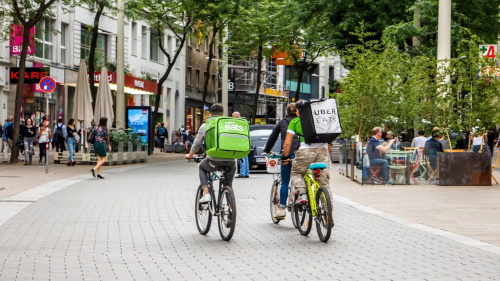
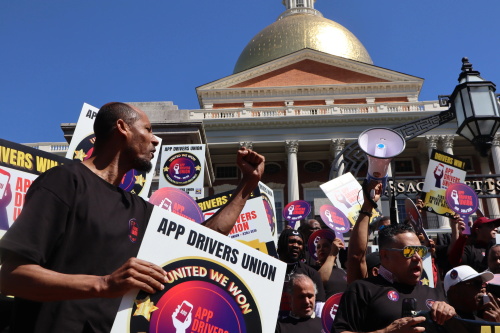
The Gig Economy Retirement Crisis: Why Traditional Financial Products Ignore 48% of the Workforce
Gig workers now make up nearly half of the global workforce, yet traditional retirement finance products still largely exclude them.
By Victoria Lane | Updated on April 08, 2026 | 🕓 18 minutes
Key Highlights
- Why are many gig workers denied financial products despite good credit scores?
- How do informal savings networks succeed where banks struggle?
- What is “project-based saving,” and why might it work better than monthly contributions?
- Why could portable benefits become one of the biggest financial policy debates of the next decade?
If you open the retirement savings page of almost any mainstream bank, you will probably see a sentence like this:
“Set up automatic monthly contributions and plan your future with ease.”
That sounds perfectly reasonable for someone with a fixed salary. But for a freelancer who completed 40 Deliveroo orders last week, only managed eight this week because of the flu, and plans to take on two Fiverr design projects next month, “automatic monthly contributions” is not a convenience feature. It is a psychological trap. It assumes a level of income stability that simply does not exist in their reality.
And that is the core problem: the retirement crisis facing gig workers is not about gig workers “failing to save.” It is that the entire financial infrastructure was built with a different lifestyle in mind. When nearly 48% of the global labor force works outside traditional employment structures, financial products still behave as though everyone receives a predictable monthly paycheck.
That 48% figure comes from the McKinsey Global Institute’s American Opportunity Survey (2022), which surveyed 25,062 respondents and found that 36% of U.S. workers participated in some form of contract, freelance, or gig work. Expand the scope to informal and non-standard employment globally, and the ILO’s World Employment and Social Outlook: Trends 2025 estimates that informal employment still accounts for between 60% and 87% of employment in developing economies.
But before going further, it is worth pouring a little cold water on the numbers themselves. The definition of “gig worker” remains frustratingly unclear. Does a university professor who drives for Uber on weekends count? Different institutions use wildly different definitions, producing estimates that range anywhere from 3.8% to 40%. A 2020 study by Pew Charitable Trusts even found that 40% of so-called “nontraditional workers” also held traditional jobs at the same time.
In other words, we still do not fully understand how large this problem actually is.
The Contradictory Data: Are Gig Workers Saving or Not?
There is an interesting contradiction here that rarely gets discussed together.
On one hand, research published in March 2025 by the Georgetown University Center for Retirement Initiatives found that 23.4 million gig economy workers in the United States lack access to workplace retirement savings options. More broadly, 47% of full-time and part-time private-sector workers — roughly 59 million people — do not have access to employer-sponsored retirement plans.
On the other hand, the Investment Company Institute’s NORC AmeriSpeak survey from late 2025 found that 71% of gig-worker households reported owning retirement assets such as 401(k)s or IRAs, compared to 74% among non-gig households. Even among workers who relied primarily on gig work for income, 68% still held retirement assets.
Are these numbers contradictory? Not really.
What they reveal is the real shape of the problem: gig workers are not refusing to save. They are being forced to save in much harder ways.
They have no employer match. No automatic enrollment. No HR department helping them fill out forms. They must research IRA structures themselves, calculate contribution limits themselves, and decide month by month how much they can afford to set aside while navigating unstable income streams.
Put differently, retirement saving for gig workers is manual, while retirement saving for traditional employees is automated.
In the short term, that distinction may not appear dramatic. Over a 20-year compounding period, however, the difference becomes enormous.
Inside the System: How KYC Costs Create Structural Exclusion
A few years ago in London, I met a Polish freelance photographer named Kamil. His income structure looked something like this:
- 60% from wedding photography paid through direct transfers
- 25% from Shutterstock royalties paid monthly in U.S. dollars
- 15% from photography workshops paid partly in cash
He wanted to open a personal pension account (SIPP). The bank asked for “three months of salary slips.”
He did not have salary slips. What he had were PayPal screenshots, multi-currency bank transfers, and handwritten cash receipts.
This is not an isolated case. Rollee’s 2023 report, The Gig Economy Equality Gap, found that 25% of financial institutions in the UK could not access complete income data when assessing gig-worker loan applications, contributing to the fact that 70% of gig workers struggled to obtain financial product approval. Even more strikingly, 66% had been denied loans despite maintaining good credit scores.
Why does this happen?
Because traditional financial KYC systems were built around one core assumption:
One person = one employer = one monthly payslip.
Gig workers do not fit that model. Their income often comes from multiple platforms, currencies, payment cycles, and sometimes cash. Verifying that income is far more expensive than verifying a standard salary document.
This creates a neglected economic reality:
The marginal compliance cost of serving non-standard workers is often higher than serving traditionally employed workers.
Financial institutions rationally choose not to serve them — not because gig workers are inherently untrustworthy, but because the cost structure makes them economically inconvenient.
The result is a paradox: the people who most need financial inclusion are often the least attractive customers for the financial system.
The “Monthly Salary Assumption” Hidden Inside Product Design
Traditional retirement products contain an invisible assumption:
Your income is smooth, predictable, and arrives on schedule every month.
Automatic deductions, employer matching programs, monthly IRA contribution structures — all are built around the salary model.
Gig-worker income, by contrast, looks more like a heartbeat monitor.
A freelance graphic designer friend in Lisbon told me that her best month last year brought in €4,200, while her worst month generated only €800. For her, “saving €300 every month” is easy during some periods and impossible during others.
A 2021 Pew Charitable Trusts survey found that the absence of employer-sponsored retirement plans was the single biggest savings obstacle for nontraditional workers. More than half of respondents — 53.7% — said employers from the previous year offered no retirement plans at all.
Yet the same survey found something fascinating: if they were eligible for defined-contribution retirement savings plans, 77.5% said they would participate.
That matters.
Gig workers want to save. Existing products simply make it difficult for them to do so.
I have noticed another subtle pattern as well: many gig workers are not avoiding saving. They are simply saving in the “wrong” places — highly liquid but low-yield accounts.
Why?
Because their financial priorities are fundamentally different.
Liquidity matters more than yield.
When next month’s income could collapse unexpectedly, money locked away inside retirement accounts can feel psychologically stressful rather than reassuring.
The Federal Reserve’s Report on the Economic Well-Being of U.S. Households in 2024 found that only 42% of platform-based gig workers had enough savings to cover three months of expenses.
What gig workers need is not “retirement products for poor people.”
They need cash-flow management systems that are compatible with volatility.
Field Observations: How Gig Workers Are Improvising Their Own Solutions
Observation 1: Informal Savings Networks Are Still Thriving
In Kenya, more than 65% of boda-boda riders and freelancers are denied formal loans despite having consistent mobile payment histories. Many turn instead to Chama systems — informal rotating savings groups.
Across Latin America, Tandas remain widespread. In India, Chit Funds continue to play a similar role.
These systems often carry higher risks and higher costs, yet they understand one critical truth:
Gig workers need flexible contributions, not rigid monthly obligations.
Observation 2: Platform Data Is a Double-Edged Sword
Platforms like Uber and Upwork hold enormous amounts of behavioral data about gig workers — job frequency, earnings peaks, customer ratings, work consistency.
In theory, this data could help create alternative credit scoring systems.
In practice, platforms rarely share it with third-party financial institutions.
The data stays trapped inside platform ecosystems, used to optimize dispatch algorithms and platform profitability rather than worker financial security.
Ironically, platforms use this data extensively to improve their own margins while doing almost nothing to help workers build long-term financial resilience.
Observation 3: The Rise of “Project-Based Saving”
I know a Turkish freelance translator in Berlin named Ayşe. Her method is simple:
Every time she finishes a translation project, she immediately transfers 15% of the payment into a separate savings account.
Not a fixed monthly amount.
A percentage tied directly to completed work.
She once told me:
“If I only have one project this month, then I only save that 15%. If next month I have three projects, I save more. I do not panic when there are no projects because my savings rule follows projects, not the calendar.”
That reveals a neglected design principle:
Gig-worker savings rhythms should follow income rhythms, not calendar rhythms.
Failed Attempts: Solutions That Looked Good on Paper
Case 1: The Blind Spot Inside the UK’s NEST Auto-Enrolment System
The UK’s workplace pension auto-enrolment program is often celebrated globally. It successfully pushed participation rates among employees to around 78%.
But according to IPSE research from 2024, only 31% of self-employed workers contribute to pensions — and participation continues to decline.
The reason is simple:
Auto-enrolment only applies to employees.
Self-employed workers remain excluded from the system entirely.
One of the central missions of the UK Department for Work and Pensions’ revived Pensions Commission in 2025 is addressing this gap.
Case 2: DoorDash’s “Savings Pilot”
In 2025, U.S. senators proposed the Unlocking Benefits for Independent Workers Act, encouraging platforms to provide benefits for gig workers.
DoorDash tested a program that automatically redirected 4% of workers’ pre-tax earnings into savings accounts.
On paper, that sounds promising.
In reality, average account balances remained below $400 after a year.
The deeper question is more important:
Was the 4% contribution rate actually designed around the realities of gig-worker cash flow, or was it simply an arbitrary corporate number?
The answer is probably the latter.
Case 3: India’s APY — Good Intentions, Difficult Reality
India’s Atal Pension Yojana (APY) introduced contribution levels as low as 42–210 rupees per month.
But implementation exposed major flaws:
- Fixed monthly contributions do not fit daily wage workers
- KYC requirements excluded workers lacking formal documentation
- Failed auto-debits could invalidate policies entirely
The workers who most needed protection became the least likely to maintain coverage.
All three cases share the same underlying flaw:
They attempted to solve gig-worker problems using modified versions of traditional financial products instead of redesigning systems around the realities of irregular income.
A Small Experiment: Saving by Project Instead of by Month
Inspired by Ayşe, I tried a simple thought experiment.
Imagine a freelance designer earning $48,000 annually, but with highly uneven cash flow:
- Some months bring in $8,000
- Others bring in only $1,500
Traditional advice would say:
“Save $500 every month.”
But during low-income periods, $500 may mean not being able to pay rent.
Now imagine replacing that with a project-based system:
Every incoming payment automatically diverts 10%–15% into savings.
What changes?
- Psychological alignment improves because saving is tied directly to income events
- Low-income periods become less stressful because there is no fixed obligation
- Compound growth still works because larger months compensate for smaller ones
Of course, it is not perfect.
For highly fragmented gig work — such as food delivery workers earning tiny daily amounts — the model may be less effective.
But at least it acknowledges the irregularity of gig income instead of pretending it does not exist.
Practical Guidance
If You Are a Gig Worker
- Do not wait until your income “stabilizes.”
Stable gig income is often an illusion. Starting early — even with small amounts — matters because compounding rewards time more than perfection. - Look for products that allow irregular contributions.
Roth IRAs in the U.S., Lifetime ISAs in the UK, voluntary Superannuation contributions in Australia — the key is finding systems that do not punish you for contributing less during difficult months.
Pew research found that automatic IRA systems allowing penalty-free withdrawals saw significantly higher participation rates.
- Try project-based saving.
Instead of fixed monthly amounts, divert 10%–15% every time you receive project income.
This can be managed with automatic bank rules or even a simple spreadsheet.
The key is synchronizing savings behavior with income events rather than with calendar dates.
- Be cautious about high-fee “specialized” retirement products.
Gig workers are increasingly targeted by financial marketers. Any “custom retirement solution” charging large upfront fees deserves extra scrutiny.
If You Design Financial Products or Policy
- Redesign default settings.
Move away from fixed monthly deductions toward percentage-based automatic income splitting.
Open Banking systems and APIs already make real-time income tracking technically feasible.
- Use platform data constructively.
Job frequency, historical earnings, and behavioral consistency could support alternative credit scoring systems and automated savings triggers.
For example:
“If this week’s earnings exceed the previous four-week average, automatically transfer 20% into savings.”
- Separate high-skill and low-skill gig work.
An Upwork software engineer and a Deliveroo rider face completely different financial realities.
One-size-fits-all policy frameworks will fail both groups simultaneously.
If You Are an Investor or Observer
- Pay attention to portable benefits legislation.
From U.S. state-level experiments to the UK’s revived Pensions Commission, this area is evolving quickly. - Distinguish between “cosmetic fintech” and infrastructure fintech.
The companies that genuinely solve gig-worker retirement problems will not necessarily be the ones with the prettiest apps.
The real opportunity lies in backend infrastructure:
- platform data integration
- redesigned KYC systems
- adaptive contribution mechanisms
- Watch for regulatory arbitrage.
Platforms avoid traditional benefit obligations by classifying workers as independent contractors, while consumer finance products still fail to adapt.
This responsibility vacuum creates both risk and opportunity.
There Is No Silver Bullet — But the System Is Finally Becoming Visible
At this point, I want to be honest:
I have not found a perfect solution.
The UK’s Pensions Commission will not release its findings until 2027.
DoorDash’s 4% savings pilot produced limited results.
India’s APY continues to struggle operationally.
Portable benefits sound promising, but Human Rights Watch’s 2025 report, The Gig Trap, warns that if platforms can deactivate workers algorithmically at any time, even portable benefits can disappear overnight.
Still, one meaningful shift is happening:
More people are beginning to recognize that the problem is not that gig workers “refuse to save.”
The problem is that financial products continue pretending everyone receives a stable monthly paycheck.
OECD data from 2019 showed that across 15 European OECD countries, retired self-employed workers received public pensions that were, on average, 22% lower than those of traditional employees.
That gap does not exist because self-employed workers failed to work hard enough.
It exists because the system was never designed for them in the first place.
If you lost your stable paycheck tomorrow, would your retirement system still function properly?
That question is worth considering carefully — because stability itself is becoming increasingly unstable.
Frequently Asked Questions
1. Could platform companies like Uber or Upwork help solve the retirement problem?
Potentially, yes. Platforms already possess detailed data on worker earnings, job frequency, and performance patterns. In theory, this information could support automated savings systems, alternative credit scoring, or portable benefits infrastructure. However, most platforms currently use this data primarily for operational and algorithmic purposes rather than worker financial security.
2. Which countries are experimenting with gig-worker retirement reforms?
Several countries are actively exploring reforms, including:
- The United Kingdom through its revived Pensions Commission
- The United States through portable benefits proposals and state-level pilot programs
- India through pension inclusion programs such as APY
- Australia through discussions around expanding Superannuation access for nontraditional workers
3. What is the long-term risk if the retirement gap for gig workers is ignored?
The long-term risk is the emergence of a large aging population with insufficient retirement protection, weak pension participation, and unstable financial safety nets. This could increase pressure on public welfare systems, deepen wealth inequality, and create broader economic instability over time.
References
- Georgetown University Center for Retirement Initiatives. (2025). Retirement Access and Coverage Among Gig Economy Workers. Washington, DC: Georgetown University.
- Human Rights Watch. (2025). The Gig Trap: Algorithmic Control and Worker Vulnerability in Platform Economies. New York, NY: Human Rights Watch.
- Investment Company Institute & NORC at the University of Chicago. (2025). Retirement Saving Among Gig Worker Households. Washington, DC: Investment Company Institute.
- McKinsey Global Institute. (2022). American Opportunity Survey: The Economic Lives of Independent Workers. New York, NY: McKinsey & Company.
- OECD. (2019). Pensions at a Glance 2019: OECD and G20 Indicators. Paris, France: OECD Publishing.
- Pew Charitable Trusts. (2021). Retirement Challenges Facing Nontraditional Workers. Philadelphia, PA: The Pew Charitable Trusts.
- Rollee. (2023). The Gig Economy Equality Gap. London, UK: Rollee.
About the Author
Victoria Lane is a consumer economy analyst and writer covering changing patterns of work, spending, and everyday life. She focuses on how demographic shifts, sustainability trends, technological innovation, and evolving consumer values are reshaping markets around the world.
Her work combines economic research, market analysis, and real-world case studies to explain the forces driving long-term changes in consumer behavior.
Disclaimer
This article is intended for informational and educational purposes only and should not be considered financial, legal, tax, or investment advice.
The opinions expressed in this article are those of the author and are based on publicly available research, reports, and observational analysis at the time of writing.