Why Arrow's Impossibility Theorem Applies to Your Netflix Recommendations: The Voting Economics Behind Algorithms
——Why does Netflix sometimes feel strangely inaccurate? It is not necessarily a technical failure. In many cases, it is a mathematical impossibility.
By Caleb Morgan | Updated on June 5, 2026 | 🕓 18 min read
Key Highlights
- Why do Netflix recommendations often feel “almost right” but never exactly right?
- What does Arrow’s Impossibility Theorem have to do with recommendation algorithms?
- How do multiple recommendation systems “vote” against each other inside streaming platforms?
- Can users actively improve algorithmic recommendations instead of passively accepting them?
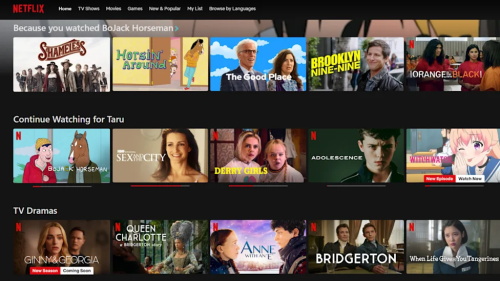
Last Tuesday night, I opened Netflix and saw three completely different things on the homepage at the same time:
- Season 2 of a Nordic crime thriller I had watched halfway through — the masterpiece of the “Continue Watching” module;
- An obscure Brazilian documentary from the 1980s — recommended because I had watched City Lights months ago;
- A newly released romantic comedy — the trending algorithm’s latest bet.
I stared at the screen for thirty seconds and eventually turned off the TV.
Not because there was nothing to watch, but because those three recommendations came from three completely different versions of “me”:
- the me who binge-watched crime dramas last week,
- the me who briefly became obsessed with silent films three months ago,
- and the version of me the platform assumes “most people become” on a weekend evening.
Those three selves were fighting on the homepage, and none of them truly represented who I was at that moment.
This is not because Netflix engineers are lazy.
It is because of a mathematical impossibility — one that economist Kenneth Arrow proved back in 1951 in Social Choice and Individual Values.
I. Arrow’s Impossibility Theorem: When Three Voters Cannot Agree
Let us bring this Nobel Prize–level theory down from the clouds.
Arrow’s Impossibility Theorem states that when there are three or more options and two or more decision-makers, no voting system can simultaneously satisfy four seemingly reasonable conditions: consistency, independence of irrelevant alternatives, non-dictatorship, and universality.
In plain English:
There is no perfectly fair voting system capable of accurately representing everyone’s preferences at the same time.
The theorem was originally developed for political elections.
Imagine a classroom trying to choose a destination for a field trip. Some students want the beach, others want the mountains, and others prefer a museum. No matter whether you use majority voting, ranked-choice voting, or any other method, someone will feel the result is unfair.
Arrow proved something much deeper than “people disagree.”
He proved that no mechanism exists that can fairly aggregate all those conflicting preferences into one universally satisfying outcome.
Now translate that into recommendation systems:
Options = the thousands of movies and shows in the content library
Decision-makers / voters = collaborative filtering modules, content-tagging engines, popularity-weighting systems, user profiling models, A/B testing groups, retention and monetization systems
Social preference = the final recommendation list shown to you
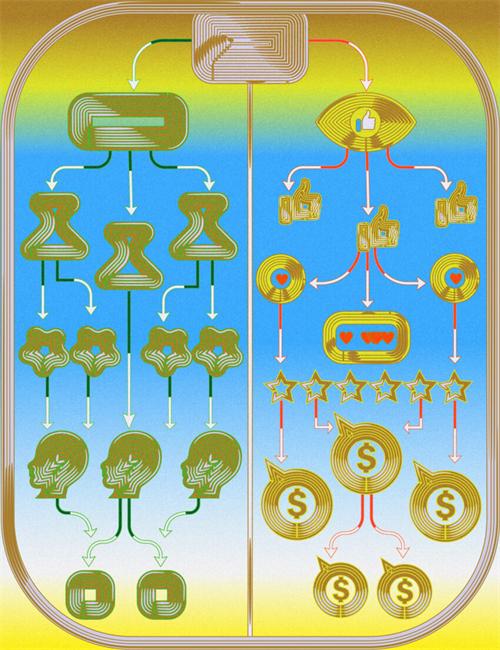
Netflix recommendations are not generated by “one algorithm” serving you.
They are produced by an algorithmic parliament voting on your homepage.
And Arrow’s theorem tells us something unsettling:
That parliament can never perfectly represent the “real you.”
This is not merely a metaphor.
A 2024 paper titled Personalization or Popularity? A Matter of Arrow’s Impossibility Theorem directly applied Arrow’s theorem to recommendation systems and argued that personalized recommendation and popularity-based recommendation are fundamentally irreconcilable paradigms. No aggregation mechanism can perfectly satisfy both simultaneously.
II. Inside Netflix’s “Algorithmic Electorate”
Netflix’s recommendation system is composed of multiple parallel algorithmic modules. Each module acts like an independent voter with its own preferences and incentives.
Voter A: Collaborative Filtering
“People similar to you also watched this.”
This is Netflix’s classic recommendation logic.
The problem is that your “similar users” may not actually exist in any stable sense.
The version of you who watches documentaries on Sunday afternoons is different from the version of you who binges action series on Tuesday nights. To collaborative filtering systems, those may appear to be two separate people.
The problem becomes even worse if your account is shared with family members, roommates, or ex-partners. Their viewing histories contaminate the algorithm’s understanding of your taste.
Former Netflix VP of Product Todd Yellin once compared recommendation systems to a “three-legged stool” made up of user behavior data, content metadata, and machine learning algorithms.
The problem is that those three legs are often pulling in different directions.
Voter B: The Content-Based Filtering Engine
“You like director X, genre Y, and tag Z.”
Netflix reportedly maintains extensive tagging systems that assign thousands of descriptors to every title — from “dark tone” to “ensemble cast” to “corrupt police officer.”
But tags are static.
Human preferences are contextual.
You may want comforting content on rainy evenings and adrenaline-driven stories on Friday nights. A tag-based engine struggles to capture emotional consumption patterns.
Voter C: Popularity and Freshness Weighting
“What is globally or regionally trending right now?”
This voter represents the platform’s interests more than your own.
It ensures newly released content gets exposure. It ensures expensive original productions receive visibility.
This is where “social choice” begins colonizing “personal choice.”
Popular does not necessarily mean personally relevant.
Voter D: Retention and Monetization Systems
“What are you most likely to keep watching without canceling your subscription?”
This is the most invisible voter.
Netflix’s recommendation engine reportedly saves the company over one billion dollars annually in retention value.
That means some positions on your homepage are not optimized for your satisfaction. They are optimized for Netflix’s financial metrics.
Voter E: The Continue Watching Ranker
“You should finish what you started.”
This voter is the most honest — and the most stubborn.
It does not care what you currently want to watch. It only cares about unfinished obligations.
Most people know this experience well:
A show you abandoned after two episodes lingers on your homepage for months like a ghost.
Every millisecond, these voters are casting ballots. Your homepage is the compromise outcome of their negotiation.
III. Failure Cases: When “Algorithmic Democracy” Breaks Down
Case 1: Spotify’s “Comfort Zone” Trap
Spotify’s Discover Weekly is widely praised, but it faces a fundamental dilemma:
accuracy versus diversity.
In a 2020 paper, Spotify researchers found that algorithmically recommended music consumption was significantly less diverse than user-driven exploration.
In other words:
The more accurately the algorithm understands you, the less willing it becomes to surprise you.
This phenomenon is often called the “diversity-accuracy dilemma.”
An algorithm cannot simultaneously maximize predictive accuracy (“you will probably like this”) and exploratory diversity (“this may surprise you in a meaningful way”).
This maps perfectly onto Arrow’s theorem.
Multiple goals — accurately representing user preference while also maximizing variety — cannot all be fully satisfied at once.
As a result, many users now describe Discover Weekly as increasingly “safe” and homogeneous.
Nothing is terrible.
But nothing feels magical anymore.
Case 2: YouTube’s “Rabbit Hole” Controversy — Both Exaggerated and Real
YouTube’s recommendation system has long been accused of pushing users into extremist “rabbit holes.”
But a 2022 large-scale study by NYU’s Center for Social Media and Politics presented a more nuanced picture.
Researchers asked 527 real users to follow algorithmic recommendations step by step across viewing sessions.
The study found that the algorithm did indeed push most users toward mildly conservative content — a phenomenon rarely discussed publicly before.
However, only about 3% of users ultimately reached genuinely extremist content pathways.
What does that mean?
For most people, recommendation systems do not create radicalization so much as gradual homogenization.
And homogenization is more subtle.
You may believe you are consuming “normal” content while your informational diet slowly narrows without your awareness.
Case 3: Amazon’s “Toilet Seat Problem”
In 2018, British writer Jac Rayner posted a tweet that received more than 400,000 likes:
“Dear Amazon, I bought a toilet seat because I needed one. It was necessity, not desire. I do not collect toilet seats. No matter how many emails you send me, I will never suddenly think: you know what, I deserve another toilet seat.”
The tweet went viral because it captured a universal experience:
Amazon’s recommendation system struggles to distinguish between one-time needs and long-term interests.
Buy a bed, and it recommends more beds.
Buy an air conditioner, and it behaves as though you have started a personal air-conditioner collection.
This is a direct violation of the “independence of irrelevant alternatives.”
A solved need — the already purchased toilet seat — continues influencing future recommendation rankings.
Amazon’s influential 2003 paper Amazon.com Recommendations: Item-to-Item Collaborative Filtering pioneered item-to-item recommendation systems, which worked extremely well for repeat-purchase categories but often behaved awkwardly for one-time purchases.
IV. Ordinary Experiences: The “Voting Paradoxes” You Encounter Every Day
Phenomenon 1: The Homepage of “Average Taste”
Why does the Netflix homepage often feel merely “fine” instead of exciting?
Because it is the compromise outcome of multiple competing algorithmic blocs.
Collaborative filtering wants to recommend niche thrillers.
The popularity module wants to promote newly released blockbusters.
The retention system wants you to resume unfinished shows.
The winner becomes the safest middle-ground option:
something everyone tolerates, but nobody passionately wants.
Phenomenon 2: Recommendations Seem Worse the More You Use Them
The algorithm is not necessarily becoming less intelligent.
Your preferences are evolving faster than the algorithmic voting system can adapt.
Last month you were obsessed with science fiction.
This month you suddenly want historical dramas.
Meanwhile, the algorithmic parliament is still voting using outdated campaign data.
Phenomenon 3: Clearing Watch History Actually Helps
This is not superstition.
You are manually resetting voter influence inside the system.
Netflix allows users to remove individual viewing records, which is effectively equivalent to saying:
“I revoke this voter’s representation rights.”
V. Practical Strategies: How to Reclaim Your Voting Power as an “Algorithmic Citizen”
The real value of understanding Arrow’s theorem is not pessimism.
It is developing a kind of algorithmic citizenship.
You stop seeing yourself as a passive recipient of recommendations and start behaving like an active participant in the system.
Strategy 1: Purify Your Accounts
Create separate user profiles for different viewing contexts.
Netflix supports multiple profiles for a reason.
Do not allow your children’s cartoons and your crime documentaries to share the same collaborative filtering pool.
This reduces voter noise inside the algorithmic parliament.
Strategy 2: Vote Actively
Do not consume passively.
Explicitly use “like” and “dislike” feedback.
Every thumbs-up or thumbs-down changes the weighting of certain algorithmic modules.
Each interaction becomes a ballot cast in the recommendation election.
Strategy 3: Search Strategically
Occasionally search for niche or unexpected content manually and watch it fully.
This sends strong signals to the content-based filtering engine and disrupts collaborative-filtering homogeneity.
It is the algorithmic equivalent of introducing a third-party candidate into a stagnant two-party system.
Strategy 4: Practice Periodic “Algorithmic Amnesia”
Regularly clean viewing histories, especially accidental clicks and irrelevant experiments.
This is equivalent to forcing a new election cycle.
The Amazon toilet-seat problem persists precisely because many recommendation systems lack meaningful forgetting mechanisms.
Strategy 5: Maintain External Preference Memory
Use third-party platforms such as Letterboxd or IMDb to track your genuine preferences independently.
When recommendation systems drift away from your real interests, you gain a reference point to determine whether you changed or whether the algorithm compromised your preferences.
Strategy 6: Accept Imperfect Representation
This is perhaps the most important strategy of all:
No recommendation system can perfectly represent you.
That is not merely a technological limitation.
It is a mathematical one.
Lowering expectations can actually help you use recommendation systems more consciously and effectively.
References
1. Gomez-Uribe, C. A., & Hunt, N. (2015). The Netflix Recommender System: Algorithms, Business Value, and Innovation. ACM Transactions on Management Information Systems, 6(4), 1–19.
2. Linden, G., Smith, B., & York, J. (2003). Amazon.com Recommendations: Item-to-Item Collaborative Filtering. IEEE Internet Computing, 7(1), 76–80.
3. Anderson, A., et al. (2020). Algorithmic Effects on the Diversity of Consumption on Spotify. Proceedings of The Web Conference 2020, 2155–2165.
4. Brown, M. A., et al. (2022). Echo Chambers, Rabbit Holes, and Ideological Bias: How YouTube Recommends Content to Real Users. CSMaP / Brookings Institution.
5. Personalization or Popularity? A Matter of Arrow’s Impossibility Theorem (2024). In Frontiers in Artificial Intelligence and Applications.
About the Author
Caleb Morgan is a behavioral economics analyst focused on consumer psychology, digital decision-making, and online market behavior. He studies how cognitive biases, pricing strategies, choice architecture, and user experience design affect the way people evaluate products and make purchasing decisions.
His writing translates academic research and real-world business practices into practical insights about consumer behavior in digital markets.
Disclaimer
This article is intended for informational and educational purposes only. The views expressed are analytical interpretations based on publicly available research, academic studies, industry reports, and observed platform behaviors. The article does not claim insider access to proprietary recommendation algorithms used by Netflix, YouTube, Spotify, Amazon, or other platforms.