Secondhand Markets Have a Counterfeit Problem. Blockchain Thinks It Has the Answer
The global resale market is approaching $600 billion, but counterfeits and authentication failures are forcing both buyers and sellers to pay the price.
By Victoria Lane | Updated on: June 5, 2026 | 🕓 12 minutes
Key Highlights
- Why are secondhand markets particularly vulnerable to counterfeit goods?
- What are the main limitations of blockchain in resale markets?
- Who actually benefits from blockchain authentication, and who may be left out?
- What practical steps can buyers and sellers take today to reduce trust risks?
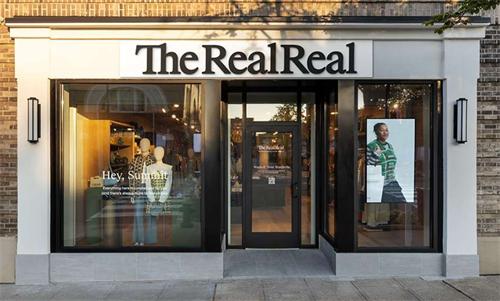
In 2019, an American consumer purchased a Dior handbag for $3,600 on The RealReal. The platform promised “100% authenticity guaranteed.” But when the buyer later brought the bag to a Dior boutique for repairs, staff informed him that the bag was actually a high-quality counterfeit.
This did not happen on the dark web or at a street market. It happened on one of the largest luxury consignment platforms in the United States — a company whose core selling point was supposedly expert authentication.
The story exposed one of the most fragile pressure points in the resale economy: the larger the market becomes, the more expensive trust gets.
I. Why Secondhand Markets Are Especially Vulnerable to Trust Collapse
According to the 2026 Resale Report published jointly by ThredUp and GlobalData, the global secondhand apparel market is expected to reach $393 billion by 2030. In the United States alone, secondhand clothing sales grew 13% year-over-year in 2025 — nearly four times faster than traditional retail apparel.
Another estimate from Maximize Market Research is even more aggressive: the overall global secondhand goods market reached approximately $594.45 billion in 2025 and is projected to grow at a compound annual growth rate of 13.6%, eventually surpassing $1.45 trillion by 2032.
The market is expanding faster than the infrastructure required to support trust.
Back in 1970, economist George Akerlof introduced “The Market for Lemons” theory, explaining that when buyers and sellers possess unequal information, low-quality goods gradually drive high-quality goods out of the market. Digitalization did not eliminate this problem in secondhand commerce — it simply moved it onto a screen.
In primary retail markets, counterfeit disputes can at least be taken directly to brand boutiques. But resale markets suffer from a deeper issue: identity ambiguity.
Every time an item changes hands, part of its history becomes diluted.
A handbag may leave a boutique in Paris, pass through a private seller in Berlin, a consignment platform in New York, and eventually end up with a buyer in Tokyo. By then, the item’s “identity” has already been washed several times.
An even less visible problem is that genuine products are frequently misidentified as fake.
A Tokyo-based seller on Mercari once told me that he tried to sell an authentic Leica lens, but because the original packaging box was missing, buyers questioned its authenticity. In the end, he had to lower the price by nearly 30% just to complete the sale.
This friction cost — where authentic goods are penalized because trust is weak — is also part of the counterfeit problem.
Meanwhile, the public often overestimates how sophisticated platform authentication actually is.
In 2019, a CNBC investigation revealed an uncomfortable detail inside The RealReal: some employees responsible for “authentication” were actually copywriters who reportedly received only five minutes of training before being asked to evaluate Hermès scarves.
In October of the same year alone, the platform reportedly identified nearly 4,000 counterfeit items internally.
Chanel later sued The RealReal, accusing the company of selling counterfeit handbags. In the lawsuit, Chanel bluntly argued: “Only Chanel can know what is genuinely Chanel.”
These incidents exposed an uncomfortable industry reality: many platform authentication systems are not operated by seasoned brand experts. Instead, the work is often outsourced to hourly employees or junior staff operating under heavy inventory pressure and throughput targets.
At times, “authentication” functions more as a marketing narrative than as a rigorous technical process.
II. Blockchain’s “Digital Passport”: What Problem Is It Actually Solving?
Against this backdrop, blockchain has been presented as a possible solution.
But first, an important misconception needs to be cleared up: blockchain itself cannot identify counterfeit goods.
What it addresses is a more fundamental issue — provenance.
Imagine purchasing a secondhand Louis Vuitton handbag. Blockchain cannot determine whether the stitching or leather grain is authentic. But it can potentially tell you whether the bag was originally manufactured by LVMH in 2021, whether it underwent official repairs, and whether ownership was transferred multiple times.
These records can be stored on permissioned blockchain systems such as the Aura Blockchain Consortium, an industry initiative backed by LVMH, Prada Group, and Cartier.
Swiss watchmaker Breitling began issuing digital passports for its watches in 2020, recording service histories and ownership transfers in order to improve trust in the resale market.
The European Union is also moving toward Digital Product Passports through regulatory frameworks, with plans to require traceable digital identities for certain product categories by 2030.
European resale platforms such as Vestiaire Collective have also explored blockchain-supported digital certificates in an effort to upgrade “platform authentication” into verifiable on-chain records.
The core logic is straightforward:
Instead of relying on paper receipts or centralized platform databases — both of which can be altered or lost — an item’s history is migrated onto a distributed ledger.
Once records are placed on-chain, future repairs, resales, appraisals, and ownership transfers can all be appended to the same immutable history, effectively creating a tamper-resistant “passport” for the product.
But this logic contains one critical weakness:
The very first record entered onto the blockchain must already be true.
III. The Uncomfortable Reality: Five Major Problems Blockchain Still Hasn’t Solved
Once the technological narrative is stripped away, blockchain applications in resale markets begin to look far less perfect.
1. “Garbage In, Garbage Out”
Blockchain guarantees that records cannot easily be altered after they are uploaded. It does not guarantee that the original data was accurate in the first place.
A supply-chain blockchain research team at the University of Bath documented a revealing observation during a field case study: one supply-chain executive admitted that blockchain tends to create a kind of “halo of truth,” causing people to stop questioning the underlying data itself.
If a counterfeit handbag is mistakenly registered as authentic during the first upload, blockchain will not correct the mistake. It will simply preserve that mistake permanently — while simultaneously making it appear more trustworthy.
2. Authentication Failures Before the Blockchain Cannot Be Fixed by Technology
The RealReal case provides a brutal reference point here.
Even if the platform were to fully adopt blockchain systems in the future, if the initial authentication is still performed by undertrained staff who received only minutes of instruction, blockchain would not reduce counterfeits. It could actually provide fake goods with a more technologically convincing layer of legitimacy.
Chanel’s lawsuits against both The RealReal and WGACA also reveal another structural issue: luxury brands themselves often do not recognize third-party platforms as legitimate authorities capable of authenticating their products.
In other words, blockchain adoption in resale markets still lacks reliable “first-mile verification” from the brands themselves.
3. The Cost Problem
Blockchain authentication is not free.
Industry estimates suggest that blockchain traceability systems combined with NFC chips cost roughly between $0.45 and $1.20 per item.
For a $3,000 luxury handbag, that cost is negligible. But for a $200 used smartphone or a $30 vintage T-shirt, the additional expense can consume a significant portion of the profit margin.
As a result, blockchain currently makes economic sense mainly in high-value luxury categories. It does not scale efficiently to the massive long-tail segment of the resale economy — the everyday transactions happening on Facebook Marketplace, Craigslist, Mercari, and similar platforms.
4. Consumer Behavior Is More Stubborn Than Technology Assumes
Many technology solutions assume that consumers will actively scan, verify, and learn new systems.
Reality is messier.
A 2024 survey by Vinovest found that only 12% of luxury wine buyers regularly scanned product verification codes.
In secondhand smartphone markets in cities like Jakarta or Mumbai, I observed a far more traditional trust mechanism at work: buyers did not ask for blockchain records. Instead, they took phones to local repair technicians who had spent twenty years fixing devices in the same shopping mall corner.
In those communities, the verbal judgment of a trusted local technician carried far more psychological weight than any digital certificate ever could.
5. Governance Failures Are More Dangerous Than Technical Failures
TradeLens — the blockchain supply-chain project jointly launched by IBM and Maersk — was once considered one of the most ambitious blockchain infrastructure projects in logistics.
It ultimately failed.
A 2025 case study published in Frontiers in Blockchain argued that TradeLens collapsed not because of technical shortcomings, but because of insufficient stakeholder participation, unclear governance structures, and concerns over data confidentiality.
This offers an important warning for resale-market blockchain projects.
For blockchain authentication systems to function at scale, platforms, brands, sellers, logistics providers, and repair services all need to follow shared data standards.
But in highly competitive commercial environments, multi-party coordination is often the hardest problem of all.
IV. Who Actually Benefits? The Answer Depends on Your Role
Blockchain’s impact on resale markets is not distributed evenly.
For high-value luxury goods, digital passports are already beginning to create measurable premiums.
A Breitling watch with a complete on-chain ownership and service history tends to move faster in secondary markets than an identical watch accompanied only by paper receipts.
Professional sellers also have stronger incentives to adopt blockchain systems because larger operational scale allows them to spread the costs more efficiently.
Individual sellers, however, may become marginalized.
If you simply want to sell an old coat on Vinted, you are unlikely to learn how to manage crypto wallets or blockchain verification systems just to complete a low-value transaction.
Regional differences matter as well.
Consumers in Europe and North America are often more sensitive about privacy concerns and may resist the idea of brands continuously tracking product ownership through blockchain systems.
Meanwhile, in many Southeast Asian markets, centralized platform guarantees — such as Shopee Guarantee — still create more psychological trust than decentralized ledgers.
V. Practical Strategies: What Ordinary Buyers and Sellers Can Do Right Now
Blockchain has not yet become the foundational infrastructure of resale commerce. But both buyers and sellers can already adopt hybrid strategies to reduce the “trust tax.”
If You’re a Buyer
Do not rely on any single form of authentication.
The safest purchasing decisions depend on cross-verification.
For high-value items, ask sellers for multiple layers of evidence:
- On-chain records, if available
- Original purchase receipts
- Third-party authentication reports
If a seller claims an item is “blockchain authenticated,” ask one very specific question:
“Can you show me the TxID?”
A genuine blockchain authentication system should provide a transaction hash that can be verified through a public blockchain explorer.
If the seller only provides an internal QR code inside a platform app, you may simply be looking at a centralized database dressed up with blockchain language.
Learn to recognize “pseudo-blockchain” marketing.
Many platforms market ordinary database systems as “blockchain traceability,” even though real distributed ledgers should allow cross-platform verification rather than existing solely within a single company’s ecosystem.
If You’re a Seller
Preserve digital records of original purchase documentation.
Even without blockchain integration, receipts, warranty cards, and photographs of original packaging can significantly improve transaction speed and buyer confidence.
Internal eBay data reportedly shows that secondhand luxury items accompanied by original documentation sell noticeably faster than similar listings without proof of purchase.
If you sell high-value categories such as watches, designer handbags, or jewelry on platforms that support systems like Aura Consortium authentication, proactively using those services can increasingly function as a premium signal.
It tells buyers that you are willing to accept higher transparency costs in exchange for stronger trust.
If You’re Observing the Industry
Pay attention to projects that are genuinely investing in blockchain infrastructure — such as the Aura Blockchain Consortium or Breitling’s digital passport system — and distinguish them from superficial marketing narratives.
A useful benchmark is simple:
Does the project provide publicly accessible on-chain verification tools, or does it merely display a “guaranteed authentic” label inside its own app?
Conclusion: Can Trust Become a Tradable Asset?
Blockchain’s ultimate value in secondhand markets may not lie in eliminating counterfeits entirely.
Its deeper ambition is to transform trust itself — from a vague human intuition into something that can be priced, verified, and transferred.
But for that transformation to truly happen, far more than technology must change.
Brands would need to share reliable first-mile production data.
Platforms would need to absorb the real costs of rigorous authentication.
Consumers would need to change how they verify products.
And the industry as a whole would need to accept a slower, imperfect, and deeply collaborative transition rather than expecting a technological miracle.
Frequently Asked Questions
1. Should buyers trust blockchain authentication more than platform authentication?
Not automatically. Blockchain records can improve transparency, but they are only as reliable as the information entered at the beginning of the process. Buyers should treat blockchain authentication as one layer of verification rather than a complete guarantee. In practice, the safest approach is still cross-verification: checking receipts, repair history, serial numbers, third-party authentication reports, and seller reputation together.
2. Why do luxury brands resist third-party authentication platforms?
Luxury brands argue that only they fully understand the materials, production methods, and serial systems used in their products. Many brands also worry that independent authentication platforms could damage brand value if counterfeit items are mistakenly approved. There is also a business incentive involved: maintaining exclusive control over authentication helps brands preserve authority over both pricing and resale ecosystems.
3. Will digital product passports become mandatory in more countries?
Very likely. The European Union is already moving toward Digital Product Passport requirements for selected industries as part of its sustainability and circular economy strategy. Over time, other regions may adopt similar systems, especially for high-value goods, electronics, batteries, and luxury products where traceability has economic or environmental importance.
References & Citations
1. ThredUp 2026 Resale Report (GlobalData, 2026) — Global secondhand apparel market size and growth projections.
2. Maximize Market Research, Second hand Product Market Report (2026) — Overall global secondhand product market size estimates.
3. George Akerlof, "The Market for Lemons" (1970) — Information asymmetry and the lemon market theory.
4. CNBC / Business of Fashion (2019) — Investigation into The RealReal's authentication workflow, internal disclosures, and associated luxury brand litigation (Chanel, Inc. v. The RealReal, Inc. / Chanel v. WGACA).
5. Bath University, "Blockchain case studies in supply chain visibility" — Field research on supply chain blockchain implementations and the "truth halo" observation.
6. Frontiers in Blockchain (2025) — TradeLens failure case study and governance factor analysis.
7. Aura Blockchain Consortium / LVMH & Breitling Digital Passport Program (2020) — Luxury digital passports and permissioned-chain provenance in the watch and leather goods sectors.
8. Vinovest Survey (2024) — Luxury consumer behavior data on blockchain verification code scanning, alongside industry cost estimates for NFC-blockchain integration.
About the Author
Victoria Lane is a consumer economy analyst and writer covering changing patterns of work, spending, and everyday life. She focuses on how demographic shifts, sustainability trends, technological innovation, and evolving consumer values are reshaping markets around the world.
Her work combines economic research, market analysis, and real-world case studies to explain the forces driving long-term changes in consumer behavior.
Disclaimer
The content provided is for informational purposes only and does not constitute financial, legal, or professional advice.