Why “Social Proof” Is Now a Liability: When Review Overload Activates Consumer Skepticism Algorithms
——Social proof is shifting from an asset into a liability.
By Caleb Morgan | Updated on April 06, 2026 | 🕓 14 minutes
Key Highlights
- What is “review overload,” and how does it activate consumer skepticism?
- Why do recent reviews matter more than old reviews?
- Why are functional products more vulnerable to negative reviews than lifestyle products?
- How can brands use “controlled imperfection” to increase credibility?
- Why do consumers increasingly prefer narrative-style reviews over high review counts?
- How can shoppers quickly detect potentially manipulated reviews?
1. An Ordinary Shopper’s Dilemma: When 4,800 Positive Reviews Made Me Hesitate
Last winter, I wanted to buy a pair of noise-canceling headphones in my apartment in London. I opened Amazon and saw a product ranked at the top with a 4.8-star rating and more than 4,800 reviews. By the logic of five years ago, I should have clicked “Buy Now” immediately. But I didn’t.
Instead, I spent nearly 25 minutes filtering through the 1-star and 2-star reviews, reading them one by one. My brain was running automatically:
“4,800 reviews? How many of those were manipulated?”
“Why do all the positive reviews sound so similar?”
“Why are there only two new reviews in the past three months?”
In the end, I did not buy those headphones. I chose another pair with a 4.3-star rating and only 340 reviews — but with 12 detailed long-form reviews posted within the previous 30 days. Three months later, the headphones have been perfectly fine. The battery life is indeed shorter than advertised, but the noise cancellation is good enough for me to hear podcasts clearly on the subway.
This is not an “anti-consumerism” story. It is a signal: consumers’ brains have evolved something I call a “Skepticism Algorithm.” Once the number of reviews passes a certain threshold, social proof no longer functions as an asset — it begins to become a liability.
2. Conventional Wisdom Has Been Reversed: More Reviews Can Reduce Credibility
For twenty years, traditional marketing taught us a simple equation:
More reviews = stronger social proof = higher conversion rates.
That equation largely held true in 2015. But in 2026, it is beginning to collapse.
2.1 Academia’s “Counterintuitive” Discovery
Research published in 2023 in the Journal of Marketing Research by Marton Varga and Paulo Albuquerque may be one of the most disruptive empirical analyses in recent years regarding the economics of online reviews.
Using complete clickstream data from a major British online retailer covering technology and home-and-garden categories, the researchers tracked the entire consumer journey from entering a website to making a final purchase decision.
The central finding was alarming:
For consumers who scrolled down to read reviews, the appearance of a single negative review (3 stars or lower) reduced purchase probability by an average of 41.8%.
Since only around one-fifth of visitors actually scroll to the review section, this translates into an overall demand reduction of approximately 8.4%.
More importantly, a negative review also increased the probability that consumers would browse competing product pages by 9.7%.
But the truly paradigm-shifting aspect of the study was this:
The impact of negative reviews is not evenly distributed.
For functional products — such as vacuum cleaners or printer cartridges — negative reviews are significantly more damaging than for hedonic products such as headphones or home décor.
The reason is straightforward:
Consumers have relatively unified expectations for functional products. “This vacuum cleaner must clean carpets effectively.”
By contrast, reviews of hedonic products involve subjective preference. “These headphones have too much bass” may actually be a positive trait for another buyer.
Varga and Albuquerque also discovered that the topic of a negative review determines its destructive power.
Negative reviews related to product malfunctions or customer service failures significantly affect purchase decisions.
Negative reviews involving aesthetic preferences — such as color or design style — show almost no statistically significant impact.
2.2 The “Credibility Trap” of Perfect Ratings
A long-term tracking study conducted by the Spiegel Research Center at Northwestern University uncovered a deeper psychological mechanism: consumers’ suspicion of perfection.
The research showed that once average product ratings exceed 4.7 stars, purchase intention actually begins to decline.
Consumers’ brains automatically trigger a simple but powerful judgment:
“No product is perfect. A 5.0-star rating means the reviews were filtered.”
According to the Spiegel Research Center’s data, product pages containing negative reviews actually generated conversion rates 67% higher than pages containing only positive reviews.
This does not mean negative reviews themselves sell products.
Rather, “controlled imperfection” creates credibility.
Consumers believe the reviews are authentic, and therefore trust the review ecosystem itself.
3. Why the “Skepticism Algorithm” Has Become So Important
To understand the evolution of the skepticism algorithm, we need to revisit the changing infrastructure of consumer trust.
In 2015, the review ecosystem was relatively simple:
Real users wrote real reviews, with the occasional fake review added by merchants.
Consumers’ default assumption was that “most reviews are genuine,” so review quantity genuinely functioned as a trust signal.
By 2020, the pandemic dramatically accelerated global e-commerce adoption, making reviews central to purchase decisions.
But this also gave rise to the “review economy”:
Follow-up review request emails, incentivized reviews, and professional fake-review services became industrialized.
Consumer trust began to crack — though it had not yet collapsed.
From 2024 to 2026, the widespread adoption of generative AI fundamentally changed the game.
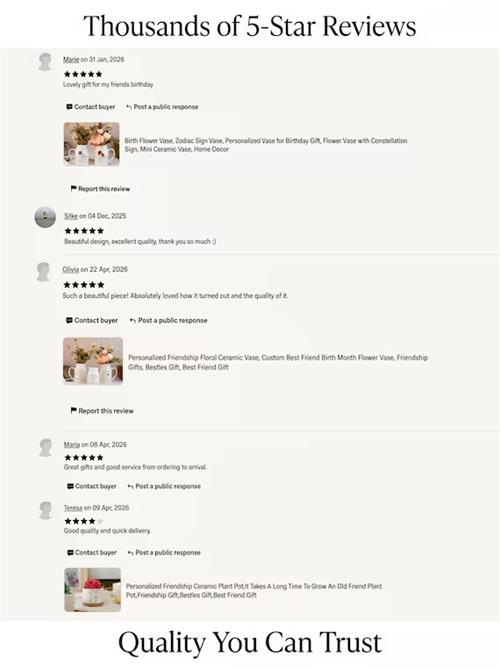
A seller can now generate 500 “realistic-looking” reviews in ten minutes, each with slightly different wording, emotional tone, and usage scenarios.
More dangerously, AI-generated reviews are often too polished compared to real reviews:
Better grammar. Cleaner structure. More evenly distributed keywords.
This is the root of what I call “homogeneity toxicity.”
AI-generated reviews are simply too good to feel real.
Consumers’ defense mechanisms evolved accordingly.
We no longer passively accept review quantity.
Instead, we actively search for evidence of imperfection:
- spelling mistakes,
- emotional complaints,
- contradictory experiences,
- excessively specific personal stories.
Ironically, characteristics once dismissed in 2015 as “low-quality reviews” have become fingerprints of authenticity in 2026.
This evolution has not been linear. It has been staircase-shaped.
Every major fake-review scandal — such as Amazon’s lawsuits against review manipulation networks in 2023 or TripAdvisor’s exposure of massive fake hotel review operations in 2024 — has accelerated upgrades to the skepticism algorithm.
Consumers did not slowly become smarter.
They were trained by repeated deception.
4. The “Skepticism Algorithm” Inside Consumers’ Minds: Four Forms of Toxicity
Based on the research above and my own observations across multiple e-commerce platforms — from Amazon to Germany’s Zalando, from Japan’s Rakuten to Southeast Asia’s Shopee — I summarize review overload into four forms of “toxicity.”
These are not theoretical abstractions. They are patterns you can observe on almost any product page.
4.1 Volume Toxicity
Symptom:
The review count vastly exceeds what would reasonably fit the product’s lifecycle.
For example, a niche massage gun launched in September 2024 already accumulating 12,000 reviews by January 2025.
Consumer reaction:
“This is impossible. A niche product could not organically generate this many voluntary reviews in such a short time. Either the reviews are fake, or the brand heavily incentivized them.”
A 2024 global survey by Bazaarvoice involving over 8,000 consumers and more than 400 brands found that:
- 75% of consumers worry about fake reviews,
- 52% lose trust in brands associated with fake reviews,
- 56% refuse to purchase once they suspect review manipulation.
4.2 Homogeneity Toxicity
Symptom:
Large numbers of reviews use similar sentence structures, emotional intensity, and keyword patterns.
For example, twenty consecutive reviews all containing phrases such as:
“Amazing product!”
“Highly recommend!”
“Changed my life!”
Consumer reaction:
“These were written by the same person — or generated by AI.”
This toxicity intensified sharply after 2024 because generative AI made mass production of “authentic-looking” reviews extremely cheap.
Consumers developed a corresponding defense mechanism:
Patterns themselves became signals of inauthenticity.
4.3 Staleness Toxicity
Symptom:
A product page accumulates large numbers of historical reviews, but almost no recent reviews appear within the last three to six months.
Consumer reaction:
“This product may no longer be good. The company may have stopped operating. Or product quality may have declined recently while old reviews continue masking the problem.”
According to Bazaarvoice data, 61% of consumers consider reviews written within the past three months more trustworthy than older reviews.
This is a time dimension many brands ignore:
Reviews are not static assets. They expire.
4.4 Perfection Toxicity
Symptom:
A product rating approaches or reaches 5.0 stars, with extremely low negative review rates (under 1%), while all criticism quickly disappears beneath overwhelming positivity.
Consumer reaction:
“This company is either deleting negative reviews or artificially inflating positive ones. Or the product is too new for problems to have surfaced yet.”
Research from Northwestern University confirms that purchase likelihood is highest when ratings fall between 4.2 and 4.5 stars.
Above that range, consumer suspicion rises sharply.
5. Practical Strategies for Brands: Turning “Review Liability” Into “Trust Assets”
The following strategies are not “growth hacking tricks.”
They are systematic adjustments grounded in the research above.
They apply to brands of all sizes — from DTC startups to multinational retailers.
5.1 Strategically Display “Controlled Imperfection”
Do not chase a perfect 5.0-star rating.
Intentionally preserve a small number of high-quality mid-range reviews (3–4 stars) that contain specific and constructive criticism.
According to Bazaarvoice’s Conversation Index, consumer trust in a review ecosystem increases by 46% when negative reviews are visibly not suppressed.
This does not mean showcasing malicious attacks.
It means displaying authentic trade-offs, such as:
“The battery lasts one day less than expected, but the noise cancellation is genuinely excellent.”
Practical implementation:
Do not configure review filters to display only “most helpful” positive reviews.
Create a “balanced view” option that allows shoppers to see representative perspectives from multiple sides.
5.2 Shift From “Numerical Display” to “Narrative Display”
Do not merely display “4.8/5, 3,200 reviews.”
Instead, highlight three to five story-driven reviews with concrete usage scenarios.
For example, instead of:
“Great product! 5 stars.”
Display:
“I used this massage gun for three months to manage IT band syndrome. The first week showed little improvement, but by the third week — combined with stretching — my post-run tightness was significantly reduced. The downside is that it is louder than advertised, though still acceptable.”
The value of these reviews lies in one key reality:
Specific narratives are difficult for AI systems to mass-produce convincingly.
They also activate situational imagination in readers.
Varga and Albuquerque’s research suggests that reviews involving concrete usage contexts are substantially more persuasive for functional products than abstract praise.
5.3 Create “Temporal Anchors” for Reviews
Add a “Recent 30-Day Review Summary” section to product pages.
Do not assume consumers will manually sort by recency. Most never do.
The solution to staleness toxicity is showing consumers:
“This product is still actively purchased, actively used, and actively reviewed today.”
If recent review volume declines, do not panic and aggressively solicit more reviews.
Instead, consider transparent messaging such as:
“We recently adjusted our manufacturing process and are currently awaiting authentic feedback from customers using the new production batch.”
5.4 Respond to Negative Reviews Using the “3E Framework”
(Explain, Empathize, Evolve)
Not every negative review requires an apology.
Varga and Albuquerque’s research found that reviews involving functional failures are the most destructive, which means they require the most precise responses.
- Explain: If the issue resulted from incorrect usage, clearly explain the correct method without sounding condescending.
- Empathize: Even if the company is not at fault, acknowledge that the customer’s frustration is real.
- Evolve: If the issue is systemic, clearly outline planned improvements and timelines.
Key principle:
Response speed matters more than wording.
Research suggests that responding to negative reviews within 24 hours can reduce their long-term negative impact by more than 60%.
5.5 Set a “Review Saturation Threshold”
This is a counterintuitive but highly valuable strategy:
For small and mid-sized brands, once 500–1,000 high-quality reviews are accumulated, intentionally stop aggressive review acquisition campaigns.
Redirect resources toward:
- user story videos,
- independent third-party product testing,
- community Q&A systems.
Analysis from PowerReviews covering 31,900 brands and 12 million product reviews found that:
Products with more than 51 reviews already convert at rates 2–3 times higher than products with fewer than 10 reviews.
Beyond that threshold, marginal returns decline sharply while the risk of volume toxicity begins accumulating.
6. Practical Strategies for Consumers: Four Ways to Protect Yourself in the “Review Jungle”
Even if you are not a brand operator, these techniques can save both time and money whenever you shop online.
6.1 Ignore 5-Star Reviews and Read 3–4-Star Reviews Instead
Mid-range reviews often contain the most realistic trade-off analysis:
“This product genuinely solved problem X, but aspect Y was weaker than expected.”
These reviews are typically more specific, less emotional, and less likely to come from incentivized reviewers.
6.2 Always Sort by “Most Recent”
Default sorting systems (“Most Helpful”) are often dominated by early accumulated positive reviews.
Sorting by recency reveals the product’s current condition:
- Has quality control declined recently?
- Has customer support deteriorated?
- Were there silent design changes?
6.3 Search for Keywords Like “however,” “but,” and “unfortunately”
Use your browser’s search function (Ctrl+F) within review pages to quickly locate reviews containing transitional language.
These reviews frequently contain constructive negative details and are among the most efficient ways to evaluate real-world product performance.
6.4 Set Your Own “Review Threshold”
My personal rule:
Once a product exceeds 2,000 reviews, I stop reading additional reviews entirely.
I focus only on:
- the most recent 50 reviews,
- and the 1-star reviews.
Beyond that point, information noise has already overwhelmed signal quality.
Conclusion: From Social Proof to Social Wisdom
The next era of social proof is no longer about “more is better.”
It is about:
“More authentic, more recent, more specific.”
This shift forces brand managers to move away from asking:
“How do we get more positive reviews?”
Toward asking:
“How do we make every authentic review generate meaningful trust?”
In 2026, as AI-generated reviews and AI-detection fatigue simultaneously explode, consumers are evolving from dependence on collective signals toward dependence on individual narratives.
The real question for brands is no longer:
“How do we get more reviews?”
It is:
“How do we make one review so credible that it outweighs a thousand?”
Sometimes, one honest negative review sells more effectively than a thousand exaggerated positive ones.
Frequently Asked Questions
1. Are negative reviews always harmful to brands?
No. Research suggests that moderate levels of authentic negative feedback can actually improve conversion rates because they increase perceived credibility and transparency.
2. What is the ideal product rating for trust?
Several consumer behavior studies suggest that ratings between approximately 4.2 and 4.7 stars are often perceived as more believable and trustworthy than perfect 5.0-star ratings.
3. How should brands respond to negative reviews?
The most effective approach is transparency, speed, empathy, and specificity. Brands that openly address criticism often build stronger long-term trust than brands attempting to suppress complaints.
References
- Varga, M., & Albuquerque, P. (2023). “Measuring the Impact of a Single Negative Customer Review on Online Search and Purchase Decisions Through a Quasi-Natural Experiment.” Journal of Marketing Research, 60(6). Working paper version available via INSEAD and Bocconi University. Dataset: Clickstream data from a major UK online retailer in technology and home-and-garden categories.
- Spiegel Research Center, Northwestern University. (n.d.). “Online Reviews and Customer Behavior: Evidence Summary.” Medill School of Journalism, Media, Integrated Marketing Communications. Key findings: optimal rating range between 4.2 and 4.7 stars; negative reviews increase conversion by 67%; verified buyers generate higher credibility.
- Bazaarvoice. (2024). “Consumer Trust in the Age of Fake Reviews: Global Survey Report.” Sample: more than 8,000 consumers across the United States, United Kingdom, Germany, France, Australia, and Canada, alongside more than 400 brands and retailers.
About the Author
Caleb Morgan is a behavioral economics analyst focused on consumer psychology, digital decision-making, and online market behavior. He studies how cognitive biases, pricing strategies, choice architecture, and user experience design affect the way people evaluate products and make purchasing decisions.
His writing translates academic research and real-world business practices into practical insights about consumer behavior in digital markets.
Editorial Transparency Statement
This article is based on publicly available academic research, institutional reports, industry surveys, and observable consumer behavior trends across major global e-commerce platforms.
The article combines:
- Peer-reviewed marketing and consumer psychology studies
- Industry benchmark reports
- Publicly documented platform developments
- Independent analysis and commentary
Disclaimer
This article is intended for informational, educational, and editorial purposes only.
The analysis presented does not constitute legal, financial, investment, psychological, or commercial consulting advice.