The Micro-Mobility Gold Rush: Who Actually Makes Money When Cities Add Bike Lanes
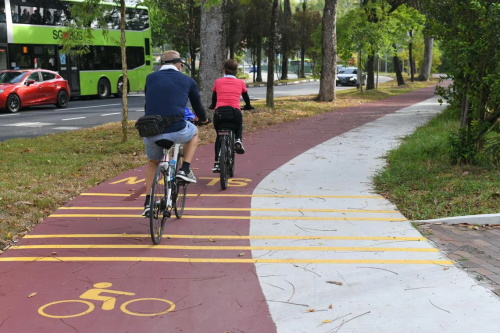
Every time a city paints a new bike lane, wealth gets redistributed. The winners, however, are rarely the ones people expect.
By Scarlett Hayes | Updated on May 31, 2026 | 🕓 14 min read
Key Highlights
- Who actually profits when cities invest in new bike lanes?
- What makes mobility data one of the fastest-growing hidden assets in urban transportation?
- Which local businesses tend to benefit from bike lane projects—and which ones often lose customers?
- Why might bike repair services become more profitable than selling bikes themselves?
1. The Boom Is Real, but Most Surfers Are Drowning
The expansion of bike lane infrastructure across major cities is undeniably real. Between 2020 and 2023, Paris added hundreds of kilometers of cycling infrastructure, Berlin built 134 kilometers of new bike lanes, and New York expanded its protected bike lane network from 223 kilometers in 2019 to 413 kilometers in 2023. According to a cross-national tracking study published in the International Journal of Sustainable Transport in 2026, these investments produced substantial safety improvements: cycling fatality rates per ten million trips fell by 88% in Paris, 82% in London, and 62% in New York.
Yet safer streets do not automatically translate into successful businesses. The most visible players in the micro-mobility sector—shared electric scooter operators—have struggled for years to achieve profitability. Bird generated $58.5 million in revenue in 2018 but reported a net loss of $367 million. After going public through a SPAC merger in 2021, its stock price collapsed from a peak of $8.40 to roughly $0.20. Lime did not announce a full year of profitability until 2022, largely by introducing swappable battery systems that significantly reduced operating costs.
Perhaps the greatest irony emerged in Paris in 2023. After the city voted by an overwhelming 90% margin to ban rental e-scooters, private scooter retailer Pure Electric projected that sales of personally owned scooters would rise by 200%. In other words, the government eliminated one business model while unintentionally fueling another consumer boom. In the world of policy intervention, winners and losers are rarely black and white.
2. Real Estate: Bike Lanes as a Signal of Place Value—But Distance and Design Matter
The effect of bike lanes on nearby property values may represent one of the most hidden yet predictable forms of wealth transfer in this entire gold rush. A 2025 study published in Environmental and Resource Economics analyzed more than 253,000 property transactions across Greater Manchester in the United Kingdom and found that homes located near cycling networks commanded an average premium of 2.8%. In central Manchester, that premium reached as high as 7.7%.
However, there is a nonlinear relationship that often goes unnoticed. Research from the University of Waterloo found that not all cycling infrastructure increases property values. Only on-road bike lanes located approximately 200 to 400 meters from residential properties were associated with a statistically significant 1.3% price premium. Infrastructure immediately adjacent to homes, as well as multi-use trails, did not produce the same effect. Put simply, homebuyers are willing to pay for convenient access to cycling networks, but not necessarily for a bike lane directly outside their front door.
Among real estate agents, proximity to bike lanes is increasingly becoming a standard feature in property listings. Yet an Amsterdam-based broker once told me that what truly drives value is connectivity. Buyers care less about an isolated stretch of painted pavement and more about whether that lane connects seamlessly into a larger transportation network. This subtle distinction means that developers who merely place a short bike lane next to a project may not achieve the return they expect.
3. Data Is the New Oil: Your Cycling Route May Already Be Part of Someone Else's Contract
The enormous amount of mobility data collected by shared scooter and e-bike companies—including travel routes, parking hotspots, peak usage periods, and origin-destination patterns—has created a largely invisible secondary market. Buyers include city planning departments, commercial real estate developers, site-selection teams at restaurant chains, and insurance companies.
This is one of the industry's lesser-known realities. When companies such as Lime or Uber submit annual operating reports to cities, they often include highly detailed mobility heat maps, sometimes down to the neighborhood level. Urban planners use these insights to adjust public transit schedules. Commercial developers use them to determine which street corner might support a third coffee shop. Insurance companies use them to assess exposure and risk.
In France, approximately 700,000 privately owned electric scooters were in circulation in Paris by 2023, and Pure Electric projected sales growth exceeding 200%. Behind this surge lies a constant process of recalibrating inventory placement, distribution networks, and supply chains using mobility data.
Yet transparency in this market remains extremely limited. Most users never realize while reading terms of service that their daily commute may ultimately become an appendix to a business-to-business data contract. There is currently no unified global regulatory framework requiring micro-mobility companies to disclose the full extent of their data monetization activities. As a result, this data gold rush largely operates in a gray area.
4. Insurance: Quiet Growth and Chaotic Pricing
Micro-mobility insurance is another sector that mainstream financial media tends to underestimate. According to MarketIntelo's 2024 market intelligence report, the global micro-mobility insurance market was valued at approximately $1.4 billion in 2024. As ownership of private e-scooters and e-bikes continues to rise, demand is expanding beyond simple theft coverage to include third-party liability, personal injury protection, and battery fire insurance.
Yet this is a market filled with uncertainty. In 2023, Europe recorded more than 1,200 e-bike-related fires or explosions, representing a 38% increase from 2022. Paris and Barcelona subsequently introduced restrictions on storing e-bikes inside residential buildings, fundamentally altering the risk assumptions behind insurance pricing models. Lacking long-term claims data, insurers have been forced to adjust premiums while simultaneously underwriting risks, resulting in substantial pricing differences across regions.
For consumers, this means that being able to afford the vehicle does not necessarily mean being able to afford the appropriate insurance. For insurers, it is a classic case of a blue-ocean market filled with hidden reefs: demand growth appears certain, but sustainable profitability remains a work in progress.
5. The Merchant's Paradox: The Same Bike Lane Creates Winners and Losers
The impact of bike lanes on local businesses may be the most controversial topic of all. Different studies often reach contradictory conclusions, which itself highlights the complexity of the issue.
First, consider the optimistic evidence. A study examining credit card transaction data in Paris between 2015 and 2019 found that bike lanes improved market accessibility by an average of 0.93%. The equivalent of an additional 46 meters of bike lane per grid cell generated approximately 4.81% growth in quarterly merchant revenue, translating into an average increase of roughly €3,000 per business.
Similarly, after New York City's Ninth Avenue installed protected bike lanes, retail sales increased by 49%, compared with just 3% growth across the rest of Manhattan during the same period.
Now consider the opposite side. A 2011 study conducted by Stantec on the commercial impact of downtown Vancouver's separated bike lanes found that merchants reported average sales declines of 10.3% and profit declines of 10.6%. Businesses on Hornby Street reported sales decreases of 13.9%, while those on Dunsmuir Street reported declines of 8.1%. The most frequently cited concerns included the loss of curbside parking, reduced storefront visibility, limitations on loading zones, and increased difficulty for pedestrians crossing the street.
How can these conflicting findings be explained?
The answer lies in street type and time horizon. The Paris study covered a four-year period and took place in a city with an already mature cycling culture. The Vancouver study captured the immediate adjustment period following bike lane construction and focused heavily on businesses dependent on automobile access and parking convenience.
In addition, a 2021 literature review by Volker and Handy examined 23 North American studies and concluded that cycling infrastructure generally produced positive or statistically insignificant effects on retail and restaurant businesses. However, three studies from San Francisco found that automobile-oriented businesses—including auto repair shops, gas stations, and large-format home improvement stores—could experience negative impacts.
A more accurate conclusion, therefore, is that bike lanes do not benefit all businesses equally. They tend to reward businesses that serve pass-through consumption—such as cafés, fast-food outlets, and convenience stores—while disadvantaging businesses that depend on destination-based visits and parking convenience, including auto repair centers, warehouse retailers, and large-format stores.
6. The Rise of the Repair Economy: When Selling Bikes Stops Being the Best Business
The position of traditional bicycle shops in this transformation is far more nuanced than it appears. The European e-bike market was valued at approximately $18 billion in 2025 and is expected to continue expanding at a compound annual growth rate of 7.6%.
Yet growth in sales has not been evenly distributed across retailers.
One often-overlooked industry reality is that independent repair shops across Europe face a severe shortage of qualified technicians. A 2024 survey found that 72% of independent bicycle retailers reported waiting times exceeding three weeks for complex repairs involving motors or battery diagnostics. At the same time, the European Union is advancing Right-to-Repair legislation that would require manufacturers to provide independent repair shops with access to spare parts and diagnostic tools.
As a result, repair services themselves are evolving from a secondary after-sales function into a standalone, high-value business. In the Netherlands, some traditional bicycle shops have already transformed into dedicated e-bike service centers, reducing retail floor space while expanding repair facilities. In Berlin, emerging mobile repair businesses—where technicians travel directly to customers—are beginning to erode the market share of fixed-location shops.
For everyday riders, this creates a practical lesson: when purchasing a vehicle, consider not only the sticker price but also the density and quality of local repair networks. For entrepreneurs, selling the shovels—repair and maintenance services—may prove more resilient than digging for the gold through vehicle sales alone.
7. An Informal Field Observation
During the first half of 2024, I conducted a six-month informal observation of a newly completed bike lane located in the commercial district of a mid-sized European city. Before redevelopment, the street consisted of four traffic lanes with curbside parking. After reconstruction, it was reduced to two traffic lanes, with protected bike lanes added on both sides.
My methods were far from scientific, but they revealed details that official statistics often fail to capture:
- Business turnover: Within six months, three home goods stores that depended heavily on curbside parking closed. They were replaced by two bicycle accessory shops and a takeaway coffee kiosk specializing in five-minute service.
- Parking behavior: Although curbside parking capacity declined, vacancy rates at nearby parking garages did not fall significantly, suggesting that part of the original driving customer base simply disappeared.
- Consumption patterns: Cyclists were noticeably more likely than drivers to purchase coffee while waiting at red lights. However, they rarely remained in the area for more than ten minutes after reaching their destination.
The sample size is far too small to support statistical conclusions. Nevertheless, it points toward an important mechanism: bike lanes do not merely change traffic volume; they change the way people stop and spend time.
Cyclists move through commercial corridors like flowing water. Drivers, by contrast, tend to anchor themselves before spending money. Understanding this distinction may be crucial for retail location strategy.
8. An Action Map for Different Stakeholders
By this point, you may be asking: what does all of this mean for me?
The following practical observations are based on the research and field observations discussed above. They should not be interpreted as investment or business advice.
For Commuters: Build a Complete Transportation Ledger
Do not compare only fuel costs and electricity costs. The true cost of commuting includes time, depreciation, maintenance, theft risk, insurance expenses, and the cost of alternative transportation during bad weather.
In many European cities, the five-year total cost of ownership of an e-bike may be lower than the cost of public transportation season passes. However, that assumption depends on your ability to perform basic repairs yourself or access affordable repair services nearby.
For Small Business Owners: Understand Location Logic
If your business relies on spontaneous customer traffic, the fact that a bike lane passes by does not automatically mean it will generate sales.
The critical variable is whether cyclists are forced to slow down or stop. Traffic lights, intersections, bottlenecks, and transition zones create friction points where spending occurs. These locations often matter more than total cycling volume.
Providing secure bicycle parking may become just as important as providing parking for automobiles.
For Investors and Entrepreneurs: Watch the Overlooked Opportunities
Potentially Overvalued Sectors
- Undifferentiated shared scooter operations (capital intensive, highly exposed to regulation, long path to profitability)
Potentially Undervalued Sectors
- Micro-mobility insurance (rapid demand growth with limited supply)
- Business-to-business mobility data services
- E-bike repair and subscription maintenance programs
- Anti-theft and safety accessories
For Renters and Homebuyers: Read the Signals Early
In districts where urban planning projects are still unfolding, new bike lanes often function as a leading indicator.
They signal that governments may continue investing in active transportation networks over the next five to ten years. Compared with officially announced metro expansions, bike lanes can provide an earlier and more subtle signal of neighborhood change.
At the same time, they are inherently less certain because bike lanes can be removed, redesigned, or rerouted.
9. A Conclusion Without a Conclusion
When a city paints a bike lane, it is fundamentally reallocating space, time, and wealth.
There is no universal template for who wins. Real estate developers may benefit, but outcomes depend on distance and connectivity. Merchants may benefit, but results depend on business type and street design. Data companies almost certainly benefit, yet ordinary users often have little visibility into the process. Demand for repair technicians is rising, but labor shortages continue to constrain industry growth.
More importantly, the outcomes we see today are likely temporary.
Paris moved from encouraging rental scooters to banning them in just four years. Whether the short-term pain experienced by Vancouver merchants was eventually offset by longer-term growth remains unclear because long-term follow-up research is limited. The fire risks associated with e-bike batteries may reshape insurance regulations and residential policies over the coming years.
The micro-mobility gold rush is still unfolding. The winners and losers have not been finalized.
They are still being decided, one painted line at a time.
Frequently Asked Questions
1. Are bike lanes still a good investment for cities if some businesses lose revenue?
Possibly, but it depends on how success is measured. Cities often justify bike lane investments through improvements in safety, public health, congestion reduction, and environmental goals rather than short-term retail outcomes. While some businesses may experience disruptions, policymakers typically evaluate projects using broader economic and social indicators over longer periods.
2. Why do some cities remove or reverse bike lane projects after installing them?
Political priorities, public opposition, traffic concerns, and changing economic conditions can all influence infrastructure decisions. Unlike rail systems, bike lanes are relatively inexpensive to modify, which makes them easier for governments to expand, redesign, or remove when public sentiment shifts.
3. Will mobility data eventually become regulated like financial or health data?
There is growing pressure from privacy advocates and regulators to increase transparency around mobility data collection and commercialization. While regulations remain fragmented across countries, future rules may require companies to disclose more details about how location and travel behavior data are stored, shared, and monetized.
4. Is the biggest opportunity in micro-mobility still transportation?
Increasingly, no. Many of the fastest-growing opportunities are emerging in adjacent sectors such as insurance, maintenance services, fleet management software, battery diagnostics, theft prevention, infrastructure analytics, and mobility data services. In many cases, supporting the ecosystem may prove more profitable than operating vehicles directly.
5. How can residents identify neighborhoods likely to benefit from future cycling investments?
Early signals often include municipal transportation plans, pilot bike lane projects, traffic-calming measures, new mixed-use developments, and public consultations related to active transportation. While none guarantee future appreciation, they may indicate where governments intend to concentrate infrastructure spending over the next decade.
References
1. Buehler, R., Pucher, J., & Dill, J. (2026). Cycling infrastructure and safety outcomes in major global cities. International Journal of Sustainable Transportation, 20(3), 215–232.
2. Cui, M., Levinson, D., & Krizek, K. (2025). Property value impacts of cycling infrastructure: Evidence from Greater Manchester. Environmental and Resource Economics, 91(2), 311–337.
3. MarketIntelo. (2024). Global Micro-Mobility Insurance Market Report 2024–2030. MarketIntelo Research.
4. Transport for London. (2024). Cycling Infrastructure and Urban Mobility Performance Report. Transport for London.
5. University of Waterloo. (2024). Active Transportation Infrastructure and Residential Property Values. School of Planning Research Series.
6. World Economic Forum. (2024). The Future of Urban Mobility and Micro-Mobility Ecosystems. World Economic Forum.
About the Author
Scarlett Hayes is an independent writer and market trends analyst covering emerging consumer behaviors, niche industries, and economic shifts. Her work explores how changing technologies, cultural preferences, and business models create new opportunities across consumer markets and everyday life.
She focuses on identifying overlooked trends, untapped markets, and the economic forces shaping future consumer and workplace experiences.