The Micro-Spending Trap: How Quick Commerce Platforms Exploit Mental Accounting Biases
——Research from 2,038 US adults and 429 online shoppers reveals why “small” purchases destroy budgets. Learn the five evidence-based strategies that actually work—grounded in behavioral economics, not willpower.
By Henry Lawson | Updated on April 25, 2026 | 🕓 14 minutes
Key Highlights
- What is “mental accounting,” and how do quick commerce platforms exploit it?
- Why are snacks, drinks, and emotional purchases the core of instant delivery economics?
- Why doesn’t simply knowing about manipulation stop impulsive spending?
- Why are countdown timers and free-shipping thresholds psychologically effective?
- What is the connection between AI recommendation systems and impulse buying?
- Why is changing your environment more effective than relying on self-discipline?
- Which evidence-based behavioral strategies actually reduce micro-spending?
I. Your Brain Is Lying to You: The Theory of Mental Accounting
In 1985, University of Chicago economist Richard Thaler introduced the theory of “mental accounting” in his paper Mental Accounting and Consumer Choice. The theory later contributed to his winning the 2017 Nobel Prize in Economics.
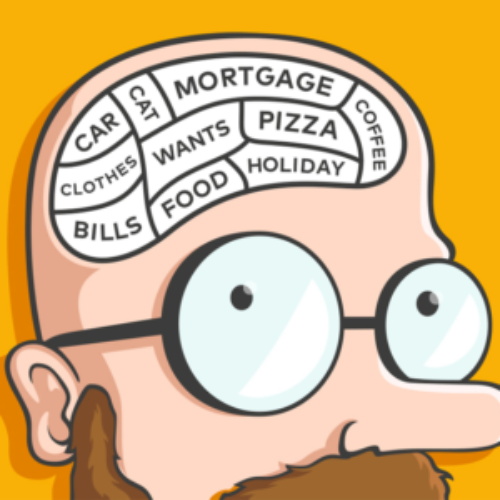
The core idea is simple: your brain does not treat all money equally. Instead, it automatically sorts money into different “mental accounts”—rent, entertainment, daily expenses, emergency savings. Each account has its own budget and its own threshold for psychological pain.
Thaler’s research found that people experience very little psychological resistance toward “small everyday expenses.” A single $2,000 rent payment may keep you awake at night, but twenty separate $10 purchases barely trigger any alarm at all.
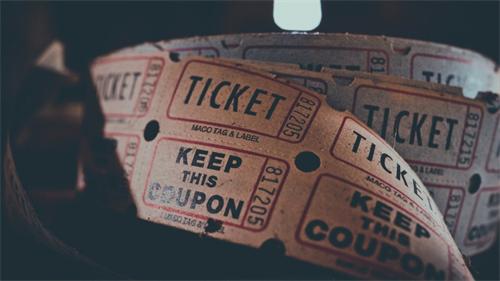
Even more interesting was a classic experiment conducted in 1981 by Amos Tversky and Daniel Kahneman. They asked two groups of participants whether they would still buy a $10 theater ticket after losing $10.
- When participants lost a $10 bill in cash, 88% (n=183) said they would still buy the ticket.
- But when participants lost a pre-purchased $10 ticket, only 46% (n=200) said they would buy another one.
It was the same $10. But once the money had been mentally labeled as part of the “entertainment account,” the brain processed the loss completely differently.
Economics textbooks teach that money is fungible. Your brain never behaves that way.
And this is precisely the psychological foundation on which quick commerce platforms are built.
II. The Global Battlefield: How the Micro-Spending Trap Works
India: Speed Matters More Than Price
India’s quick commerce market is expanding at astonishing speed. According to data from Blume Ventures, India’s quick commerce gross order value (GOV) surged from $300 million in FY2022 to $7.1 billion in FY2025—a 24-fold increase.
Blinkit and Zepto dominate the market. Blinkit operates more than 1,301 dark stores, while Zepto has over 900.
Zepto promises delivery within 10 minutes. Blinkit averages 12–18 minutes.
And what are people buying? Not rice or cooking oil.
A 2025 study on quick commerce consumer behavior based on structured questionnaires found that 62.79% of orders consisted of snacks and beverages. Meanwhile, 73.42% of users placed orders one to two times per week. Average order values ranged from just 200–400 rupees (approximately $2.30–$4.60)—exactly below the brain’s psychological “pain threshold.”
Even more revealing was the regression analysis:
- “Need for instant gratification” (β=0.412)
- “Time-saving convenience” (β=0.358)
These were the strongest predictors of usage frequency.
Meanwhile, “price sensitivity” (β=-0.089) was statistically insignificant (p>0.05).
In other words, users simply did not care if prices were slightly higher. What they wanted was immediacy.
Additionally, 63% of respondents admitted adding extra items solely to reach free shipping thresholds. Platforms successfully reframe “spending more” as “saving money.”
The United States: The Debt-Driven Culture of “Little Treats”
A February 2026 “Treatonomics” study by SurveyMonkey surveyed 2,038 US adults (margin of error ±2.5 percentage points) and revealed a troubling trend.
Among people who frequently engaged in “little treat” spending, 30% said those purchases negatively affected their financial goals—nearly double the rate among occasional treat spenders (16%).
Even more concerning:
- 36% of respondents admitted taking on short-term debt for pleasure-oriented purchases.
- Millennials reported significantly higher financial stress (32%) compared with Gen X (22%) and Baby Boomers (10%).
Meanwhile, Gopuff’s 2023 consumer report showed that “Ice Cream” was the most searched keyword on the platform that year. Sales of non-alcoholic beverage alternatives rose by 57%.
These were not necessities. They were emotional consumption products—small emotional rewards people gave themselves after exhausting days.
The problem is that once “little rewards” become daily habits, they stop functioning as rewards and become the emotional baseline. The reward must grow larger and larger, while the emotional return gradually diminishes.
Europe: The Dangerous Combination of BNPL and Instant Consumption
In Germany, quick commerce and Buy Now, Pay Later (BNPL) services are creating a potentially dangerous overlap.
According to representative consumer surveys conducted between 2024 and 2025:
- More than one-third of German BNPL users (36%) missed payment deadlines and incurred late fees within recent months.
- In autumn 2024, the figure had been 22%.
A February 2026 study by the Federal Reserve Bank of Richmond noted that the BNPL market reached approximately $70 billion in transaction volume in 2025.
Although this represented only a small share of total credit card spending (around 1.1%), the real concern was structural:
BNPL loans are often not reported to credit bureaus, meaning other lenders cannot see borrowers’ full debt exposure.
This creates the risk of hidden over-borrowing.
A 2025 literature review from Aalto University also concluded that BNPL’s impact is “mixed.” For some consumers, it provides budgeting flexibility. For others, it increases financial vulnerability.
There is no universal conclusion—which is exactly what makes the issue so complicated.
A Counterintuitive Discovery: Education Doesn’t Work
A 2023 study on e-commerce “dark patterns” (N=195 in Phase 1; N=79 in Phase 2) reached a deeply unsettling conclusion.
Researchers divided participants into groups:
- One group received education about deceptive interface design.
- Another received warning messages.
- A control group received no intervention.
The result?
Neither educational interventions nor warning messages significantly reduced spending behavior.
The Kruskal–Wallis test produced a p-value of 0.4755, meaning the spending differences between groups were not statistically significant.
The researchers openly acknowledged:
“Even after brief guidance about deceptive design patterns, participants were still exploited by underlying cognitive biases and manipulation.”
This reveals an uncomfortable truth:
Knowing a trap exists is not enough to avoid it.
The power of cognitive bias is far stronger than rational awareness.
And this is where writing this article becomes paradoxical. If reading this makes you feel “safe because you understand the system,” that may actually be the dangerous moment.
III. The Platforms’ Three-Layer Arsenal
Based on:
- Princeton University’s 2019 crawler study of 11,000 shopping websites (covering approximately 53,000 product pages and identifying 1,818 dark pattern instances across 15 types and 7 categories)
- A 2025 Polish study of 429 online shoppers, which found a positive correlation between AI-driven manipulation mechanisms and impulsive buying behavior (r=0.55)
…the platforms’ psychological arsenal can be broken into three layers.
Layer One: Eliminating the Pain of Paying
- One-click checkout
- Fingerprint authentication
- Password-free payments
- Virtual currencies and reward points
- Subscription models
- BNPL financing
All of these systems reduce the psychological pain associated with spending money.
In a 1998 study, Drazen Prelec and George Loewenstein found that credit card spending generated significantly less “pain” than cash payments.
Password-free payments reduce that pain almost entirely.
You are no longer spending money. You are merely moving numbers on a screen.
Layer Two: Creating Urgency
- Countdown timers
- “Only a few left in stock”
- “12 people are viewing this item”
- Ten-minute delivery promises
- Late-night operating hours
These systems compress the gap between desire and fulfillment.
Many platforms intentionally target users during periods when self-control is weakest: late at night, when tired, stressed, lonely, or emotionally depleted.
Layer Three: Reframing Spending
- “Only $1 per day”
- “Spend $8 more to unlock free delivery”
- “Limited-time flash sale”
These tactics redefine spending as saving, investing, or “not missing an opportunity.”
Princeton’s research found:
- 183 websites engaged in explicitly deceptive practices
- 22 third-party entities provided “dark patterns as a service”
This is not an isolated problem. It is industry infrastructure.
You are not competing against a single app. You are competing against a multibillion-dollar optimization machine.
IV. Five Practical Strategies: Not “Spend Less,” but “Redesign the System”
The following strategies are built on behavioral economics research.
Their goal is not to strengthen willpower.
Their goal is to change the decision environment—which behavioral economics consistently shows is far more effective.
Strategy 1: Restore the Pain of Paying
Disable:
- Password-free payments
- Fingerprint payments
- Automatic renewals
Return to manual password entry.
The principle comes directly from the 1998 research by Prelec and Loewenstein:
Cash payments create the strongest psychological friction. Credit cards create less. Frictionless payments create almost none.
Every additional payment step creates an opportunity for impulse interruption.
Practical example:
I disabled Apple Pay and removed all saved credit card information. Now every purchase requires manually entering the full card number, expiration date, and CVV code.
Is it inconvenient? Absolutely.
But my micro-spending frequency dropped by roughly 60%.
Not because I suddenly became more disciplined—but because I intentionally blocked the frictionless spending pathway platforms had built for me.
Strategy 2: Create Mandatory Cooling-Off Periods
Establish a hard rule:
Any non-essential purchase must remain in the cart for at least 24 hours.
This uses the reverse mechanism of hyperbolic discounting—the tendency to overvalue immediate rewards and undervalue future outcomes.
A cooling-off period forcibly delays gratification.
Practical example:
I installed a browser extension similar to Icebox that automatically blocks checkout for a set period of time.
For mobile apps, I switched to browser versions instead. Even the additional login steps create useful friction.
One critical point:
Do not trust the feeling that “I’ll still want this tomorrow.”
Research consistently shows that more than 70% of cart items are never reopened after 24 hours.
What you save is not merely money. You save yourself from temporary impulses.
Strategy 3: Merge Your Mental Accounts
Stop budgeting by category.
Do not separate spending into:
- Food
- Shopping
- Entertainment
- Transportation
Instead, create one unified “total spending” account.
Thaler’s theory suggests that categorized budgets encourage people to overspend within separate mental compartments without recognizing the cumulative impact.
A unified spending pool restores the true sense of loss.
Practical example:
I created a simple spreadsheet tracking only one number:
the weekly total of all purchases under $20.
The first time I saw the result, I was shocked.
The number was nearly three times higher than I had imagined.
That month, my “small purchases” totaled $340.
If it had been a single transaction, I would never have approved it.
But divided into 17 separate purchases, each transaction felt harmless.
Strategy 4: Physically Separate Yourself from Triggers
Delete high-frequency shopping apps.
Use browser versions instead.
Disable push notifications.
Princeton’s study found that:
- 66% of users did not understand the existence of dark patterns
- 78% used no protective tools while shopping online
This means most people are being manipulated unconsciously.
Practical example:
I deleted Gopuff, Blinkit, and all food delivery apps from my phone.
If I genuinely need something urgently, I can still access the browser version—but that extra step filters out approximately 80% of impulsive purchases.
Push notifications are among the most underestimated triggers.
They disguise themselves as “helpful reminders” or “special offers,” but in reality they are precisely timed temptations targeting moments of vulnerability.
Strategy 5: Conduct Quarterly Subscription Audits
List every recurring subscription and ask three questions:
1. How many times have I actually used this in the past 90 days?
2. If I had to choose again today, would I still subscribe?
3. What would I genuinely lose if I canceled it?
Practical example:
My first audit uncovered seven “ghost subscriptions” costing a combined $47 per month.
I had completely forgotten three of them existed.
One was a fitness app that started with a “free first month” offer. I had been paying for 11 consecutive months without opening it once.
Subscription businesses are fundamentally betting that you will forget to cancel.
And very often, they win.
V. The Final Truth: This Is an Asymmetrical War
Quick commerce platforms employ:
- Data scientists
- Behavioral psychologists
- AI optimization systems
- Multibillion-dollar experimentation budgets
Every day, they conduct A/B tests on:
- Button colors
- Countdown timers
- Notification timing
- Pricing language
- Checkout flows
—all to determine what makes you place one more order.
Your only real weapon is recognizing that the war exists.
A 2025 Polish study involving 429 online shoppers found a significant positive correlation (r=0.55) between susceptibility to AI-driven manipulation mechanisms and impulsive buying behavior.
In simple terms:
The more vulnerable you are to algorithmic influence, the more money you spend.
And the algorithms are becoming smarter every day.
But behavioral economics also offers encouraging evidence:
Changing environments is easier than changing human nature.
You do not need to become a perfectly disciplined person.
You only need to:
- Delete the apps
- Disable frictionless payments
- Silence notifications
- Increase friction
- Slow down decisions
These small environmental changes are often far more effective than any motivational commitment to “spend less.”
This is not fundamentally about self-control.
It is about design.
Platforms design environments that maximize your spending.
You can design environments that protect your money instead.
FAQs
1. Are small purchases really that harmful financially?
Individually, small purchases may appear insignificant. However, repeated micro-spending accumulates over time and often exceeds consumers’ expectations because each purchase stays below their psychological “pain threshold.”
2. What is the most effective way to reduce impulsive spending?
Research in behavioral economics suggests that changing the decision environment is more effective than relying on willpower alone. Increasing friction, delaying purchases, and removing triggers often work better than motivational budgeting strategies.
3. Can deleting shopping apps really make a difference?
Yes. Even small increases in friction—such as requiring browser logins or manual payment entry—can significantly reduce impulsive purchases by interrupting automatic behaviors.
References
1. SurveyMonkey. (2026). 2026 Treatonomics Report: Insight into US Consumer Spending.
2. Mathur, A., Acar, G., Friedman, M. J., Lucherini, E., Mayer, J., Chetty, M., & Narayanan, A. (2019). Dark Patterns at Scale: Findings from a Crawl of 11K Shopping Websites. Princeton University.
3. Handelsdaten. (2025). Buy Now Pay Later Zahlungsverhalten der Nutzer 2024-2025. Representative consumer survey in Germany.
4. Blume Ventures. (2025). India Quick Commerce Market Report FY25.
5. Goetha, S., Niha, S. S., & Fallo, A. (2024). Scarcity and Live Commerce Effects on Impulse Buying: Competitive Arousal in Kupang E-Commerce. Journal of International Master of Business Administration, 9(1). N=450 respondents.
About the Author
Henry Lawson is an independent analyst and writer focused on artificial intelligence, consumer behavior, and digital commerce. He studies how recommendation algorithms, personalization systems, AI assistants, and online platforms influence the way people discover products, evaluate information, and make purchasing decisions.
Disclaimer
This article is intended for informational and educational purposes only and should not be interpreted as financial, legal, psychological, or investment advice.