Why Loss Aversion Marketing Stops Working in the Age of AI Agents | 2026 Guide
——AI agents are rewriting consumer psychology. Discover why scarcity and urgency tactics are losing power—and what marketers must do instead.
By Henry Lawson | Updated on April 5, 2026 | 🕓 14 minutes
Key Highlights
- Why are AI agents resistant to urgency and scarcity marketing?
- What is “Algorithmic Loss Aversion”?
- How does FOBO replace FOMO in AI-driven commerce?
- What kinds of marketing signals do AI agents actually trust?
- How should brands redesign pricing and persuasion strategies for AI-mediated consumers?
- What practical steps should marketers take in 2026 to remain visible to AI agents?
Last Black Friday, I received an email that read: “Only 2 left! Price returns to $199 in 24 hours.”
I completed the purchase in 15 seconds.
This was a classic victory for loss aversion — the psychological principle that the pain of losing is roughly 2.25 times stronger than the pleasure of gaining, as described by Kahneman and Tversky in 1979.
But this year, my AI shopping assistant received the exact same email and silently did something very different.
It pulled 18 months of price history, cross-checked inventory APIs, compared the total cost of ownership across three alternatives, and evaluated my current priority levels. Two seconds later, it replied:
“Recommendation: wait. This product has displayed an ‘Only X left’ message seven times in the past year. Estimated true stock-out probability: 12%. Estimated probability of a price drop next month: 68%.”
When purchasing decisions move from human intuition to algorithmic agents, where exactly do fear-based marketing tactics break down?
I. Loss Aversion Isn’t “Broken” — It’s “Misaligned”
Let’s briefly revisit the theory.
In 1979, Kahneman and Tversky introduced Prospect Theory, arguing that humans experience losses far more intensely than equivalent gains. This insight later became one of marketing’s most powerful weapons.
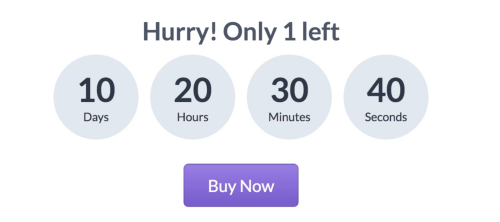
Limited-time discounts. Countdown timers. Scarcity labels like “Only 1 left.” Social proof such as “847 people already bought this.” FOMO-driven campaigns.
All of these tactics rely on the same psychological foundation.
But they also rely on a hidden assumption:
The decision-maker is a human operating primarily through System 1 thinking — intuitive, emotional, reactive, socially influenced, and vulnerable to time pressure.
Once the decision-maker becomes an AI agent, that assumption collapses.
In the sixth edition of Salesforce’s Connected Shoppers Report released in 2025, researchers surveyed more than 8,000 consumers and 1,700 retail executives worldwide. The report found that 84% of retailers were already using some form of AI, while 43% were piloting autonomous AI agents.
Among Gen Z consumers, 63% said they wanted AI agents to provide product recommendations, compared with only 23% of Baby Boomers.
This signals a structural shift in the target audience for loss-aversion marketing — from humans who can be emotionally pressured to algorithms that cannot.
II. The “Triple Immunity” of AI Agents
Why is traditional loss-aversion marketing almost ineffective against AI agents?
I believe there are three core reasons.
1. Immunity to Time Discounting
Humans are creatures of hyperbolic discounting.
We irrationally prioritize the present over the future.
That’s why “Buy now or lose the deal” works.
AI agents do not behave this way.
They use exponential discounting, or in some cases effectively zero emotional discounting. They do not feel urgency.
In September 2025, OpenAI and Stripe launched the Agentic Commerce Protocol (ACP), allowing ChatGPT to complete purchases directly inside conversations.
When a user asks:
“What are the best waterproof hiking boots under $200?”
ChatGPT can search merchant inventories, display recommendations, and complete checkout without the user ever leaving the chat interface.
The system reportedly handles around 50 million shopping-related queries per day.
But here’s the critical point:
An AI agent does not become anxious because you added a 24-hour countdown timer.
Instead, it calmly responds:
“Historical data suggests this product typically drops 23% during Prime Day. Recommendation: wait.”
2. Decoupling from Social Proof
“500 people already bought this” is a powerful signal for humans.
For AI agents, it is mostly noise.
Agents evaluate rating distributions, return rates, sentiment-analysis variance, and reliability indicators.
They care less about how many people bought something and more about how many regretted buying it.
In November 2025, McKinsey published B2B Pricing: Navigating the Next Phase of the AI Revolution, based on surveys involving more than 400 pricing executives.
The report concluded that AI-driven pricing systems were shifting B2B procurement away from relationship-driven purchasing and toward parameter-driven evaluation.
When companies deploy AI agents to assess vendors, sales lines like:
“Your competitors already use our platform”
become nearly meaningless.
The agent evaluates uptime guarantees, SOC 2 compliance, migration costs, API reliability, and operational risks.
3. The Object of “Loss” Has Changed
Humans fear missing discounts.
AI agents fear making suboptimal decisions.
The object of fear has shifted.
You are no longer trying to scare consumers.
You are challenging an optimization system.
BCG’s 2025 report, Maximizing Value Potential from AI in Procurement, estimated that AI could automate up to 75% of procurement tasks, reduce overall costs by 15–45%, and double process speed.
One energy company with annual revenue near $40 billion reportedly reduced bid-creation time by 40% and improved negotiation outcomes by 2–3% after deploying an AI bidding assistant.
Behind those numbers lies a brutal reality:
The “losses” AI agents fear are not emotional losses or missed discounts.
They fear wasted computational resources and broken delegation trust.
III. A New Concept: Algorithmic Loss Aversion
AI agents are not free from loss aversion.
They simply fear different kinds of losses.
Their aversion centers around:
- Reputation capital degradation
- Wasted computational resources
- Breakdown of delegated trust
I call this phenomenon Algorithmic Loss Aversion.
The core idea is simple:
AI agents are not optimized to avoid missing out.
They are optimized to avoid being wrong.
Consider shopping assistants like Perplexity Shopping or ChatGPT’s commerce integrations.
When evaluating a promotion, they do not impulsively react to urgency.
Instead, they ask:
“Where does this price rank within the past 12 months?”
Then they generate a probability-based recommendation.
Humans become anxious when exposed to “limited time” or “only 2 left.”
AI agents become suspicious when exposed to inconsistent data or historical anomalies.
IV. From FOMO to FOBO: Rebuilding Marketing for the AI Era
If traditional loss aversion is weakening, what replaces it?
I propose a new framework:
A shift from FOMO (Fear of Missing Out) to FOBO (Fear of Better Options).
FOBO is not driven by fear of losing.
It is driven by fear of failing to make the optimal decision.
For AI agents, this is a far stronger motivational force.
From this insight, I propose a new 4P Framework.
1. Precision > Pressure
Instead of manufacturing anxiety, provide machine-readable decision parameters.
Deploy structured Schema.org data.
Provide specification comparison matrices.
Offer APIs for real-time inventory and pricing queries.
A practical example:
In September 2025, Etsy became the first partner for ChatGPT Instant Checkout.
Sellers did not need additional setup because Etsy’s Offsite Ads infrastructure already integrated smoothly.
But the deeper reason for success was that Etsy’s product data was highly structured — materials, dimensions, customization details, and production information were already machine-readable.
That made it easier for AI agents to compare and validate products.
2. Proof > Promise
AI agents can verify nearly every claim.
Third-party certifications, live operational data, and auditable scoring systems become the new trust currency.
Brands need to build an AI-verifiable trust layer.
Quality signals should be embedded directly into pages in formats agents can crawl and validate.
3. Partnership > Persuasion
Stop trying to persuade consumers emotionally.
Instead, help AI agents include your product within their optimal decision set.
Develop agent-facing interfaces.
Create “Agent Briefs” — structured factual documents specifically designed for AI evaluation systems.
4. Permanence > Promotion
Agents care about total cost of ownership and long-term value, not one-time discounts.
Marketing must shift from promotion-driven strategies toward service-driven and subscription-oriented value models.
Transparent lifecycle cost calculators become more important than dramatic flash sales.
V. The New Frontier of Behavioral Economics: From Loss Aversion to Regret Minimization
At this point, it is useful to revisit Regret Theory, proposed by Loomes and Sugden in 1982.
Their argument was that humans ultimately fear not simply losing — but realizing they made the wrong choice.
In the AI era, this takes on a new form.
Consumers increasingly fear delegating authority to the wrong AI system.
That changes the structure of trust entirely.
Marketing strategies therefore need to emphasize:
- Reversibility (“Cancel anytime”)
- Flexibility (modular pricing)
- Human override mechanisms (“Human-in-the-loop”)
rather than scarcity theater.
VI. Cross-Industry Cases: Incomplete Outcomes and Ambiguous Realities
Case 1: B2B SaaS Procurement — An Incomplete Victory
A mid-sized German manufacturing company with around 500 employees piloted an AI procurement agent in 2025.
The agent evaluated three CRM vendors.
Traditional sales messaging such as:
“Your competitors already use our system”
had almost no impact.
The agent instead analyzed:
- API uptime (99.9% vs. 99.5%)
- SOC 2 Type II compliance
- Data export costs ($0.12 per GB vs. $0.08)
- Standard deviation of third-party G2 ratings
The result?
The AI recommended the second-cheapest vendor.
Not the cheapest. Not the most expensive.
Why?
The lowest-priced option had incomplete API documentation, making integration difficulty hard to verify.
The highest-priced option offered excessive functionality irrelevant to the company’s needs.
There was no perfect winner.
Only the option with the best balance between adequacy and minimized risk.
Case 2: Consumer Electronics — Ambiguous Pricing Signals
During Black Friday 2025, an American consumer asked a ChatGPT shopping assistant to evaluate a $1,299 laptop.
The agent discovered that the product’s six-month price range fluctuated between $899 and $1,499.
The advertised anchor pricing:
“Originally $1,999 — now only $1,299!”
was flagged as a false anchor because historical pricing data showed it had never actually sold for $1,999.
Yet the agent still did not say:
“Absolutely do not buy.”
Instead, it generated a probabilistic recommendation:
“Current price ranks at the 65th percentile of the past six months. Not optimal, but acceptable. If the purchase is urgent, proceed. Otherwise, monitor post-conference pricing trends in approximately three weeks.”
This was not a binary “buy” or “don’t buy” decision.
It was a probabilistic judgment under uncertainty.
That is fundamentally different from how humans traditionally make emotional purchasing decisions.
Case 3: Financial Services — Mixed Outcomes
A British fintech startup launched an AI financial advisor in 2025.
During periods of short-term market volatility, traditional financial marketing often relies on lines like:
“You’ll regret missing this bull market forever.”
But the AI advisor’s rebalancing algorithm naturally resisted FOMO because it optimized for long-term risk-adjusted returns rather than short-term emotional momentum.
Interestingly, the results were not entirely one-sided.
During an AI infrastructure stock rally in Q1 2025, the advisor did recommend increasing exposure to certain AI-focused ETFs.
But the recommendation was not based on fear of missing out.
It was based on metrics such as Sharpe ratios outperforming the broader market over an 18-month period while remaining compatible with the client’s risk profile.
VII. The Marketer’s Action Checklist: This Month, This Quarter, This Year
This Month (Immediate Actions)
1. Conduct an AI Audit
Use ChatGPT, Claude, or Perplexity to simulate your target customer.
Ask the systems how they evaluate your product pages.
Pay particular attention to how they respond to scarcity claims.
2. Eliminate Fake Signals
Remove countdown timers, false inventory alerts, and fabricated “original prices” that can be disproven through APIs or historical tracking.
AI systems impose long-term trust penalties for deceptive signals.
3. Deploy Structured Data
Ensure all product pages include complete JSON-LD Schema markup for pricing, inventory, ratings, FAQs, and specifications.
This Quarter (Strategic Adjustments)
4. Build AX Metrics (Agent Experience)
Track how often AI agents recommend your brand, how accurately they describe it, and how prominently you appear in AI-generated answers.
5. Create Agent-Facing Content
Produce comparison tables, decision trees, technical white papers, and structured documentation.
Machine-readable formats outperform emotional copywriting.
Tables outperform vague prose.
Data outperforms adjectives.
6. Transform Marketing Copy
Shift messaging away from emotional triggers like:
“Don’t miss out!”
toward optimization-based value statements such as:
“Consumes 23% less energy than competing products, reducing three-year TCO by approximately $1,200.”
This Year (Long-Term Infrastructure)
7. Build Verifiable Trust Infrastructure
Provide real-time data interfaces and consider third-party live auditing systems.
8. Rebuild Pricing Models
Move from promotion-driven pricing toward transparent value-driven pricing.
Offer TCO calculators and lifecycle pricing transparency.
9. Develop ARM Capabilities (Agent Relationship Management)
Just as companies once evolved from CRM systems toward CDPs, organizations now need dedicated capabilities for managing relationships with algorithmic customers.
Conclusion: You Are Not Selling to Machines — You Are Selling Through Machines to Humans Who Still Fear Loss
AI agents have not eliminated loss aversion.
They have outsourced and transformed it.
Human emotion still exists.
But emotional influence must now pass through the rational filter of algorithms.
The brands that win in the future will be those that respect both:
- the emotional foundations of human behavior
- and the rational screening mechanisms of AI agents
Fear-based marketing will not disappear entirely.
But it must evolve from:
“Scare the consumer into acting”
to:
“Earn the algorithm’s delegated trust.”
The future doesn’t belong to brands that scream “Buy now or lose forever.”
It belongs to brands that quietly prove:
“We are the optimal choice, and the algorithm knows it.”
FAQs
1. Why are AI agents less affected by urgency tactics?
AI agents do not experience emotional pressure the way humans do. Instead of reacting impulsively to countdowns or scarcity claims, they evaluate historical pricing, product quality, probability distributions, and long-term value optimization.
2. Why is structured product data becoming more important?
AI agents rely heavily on machine-readable information such as pricing history, specifications, APIs, reviews, inventory signals, and structured schema markup. Products that provide clearer data are easier for AI systems to evaluate and recommend.
3. Can AI agents detect fake discounts or false scarcity?
Increasingly, yes. Advanced shopping assistants can compare historical pricing, cross-check inventory data, and identify misleading anchor pricing or repeated scarcity tactics.
References
1. Kahneman, D., & Tversky, A. (1979). Prospect Theory: An Analysis of Decision under Risk. Econometrica, 47(2), 263-291.
2. Loomes, G., & Sugden, R. (1982). Regret Theory: An Alternative Theory of Rational Choice Under Uncertainty. The Economic Journal, 92(368), 805-824.
3. Salesforce. (2025). Connected Shoppers Report, 6th Edition. Based on insights from 8,000+ shoppers and 1,700+ retail leaders worldwide.
4. McKinsey & Company. (2025). B2B Pricing: Navigating the Next Phase of the AI Revolution. Agentic AI in Pricing Survey, November 2025, n=400+ pricing executives.
5. OpenAI & Stripe. (2025). Agentic Commerce Protocol (ACP). Launched September 29, 2025. Open source under Apache 2.0 license.
6. Sinch. (2025). 2025 BFCM Consumer Survey. Data on AI adoption and trust in holiday shopping.
About the Author
Henry Lawson is an independent analyst and writer focused on artificial intelligence, consumer behavior, and digital commerce. He studies how recommendation algorithms, personalization systems, AI assistants, and online platforms influence the way people discover products, evaluate information, and make purchasing decisions.
Disclaimer
This article is intended for informational and educational purposes only and should not be interpreted as legal, financial, investment, or business strategy advice.