Are Dynamic Pricing Algorithms Creating “Fairness Fatigue”? Consumer Backlash in 2026
——Consumers are no longer angrily protesting price fluctuations. Instead, they are slipping into a state of “fairness fatigue” — quietly leaving platforms, deleting apps, and returning to fixed-price alternatives.
By Caleb Morgan | Updated on March 5, 2026 | 🕓 11 min read
Key Highlights
- What is “fairness fatigue,” and how is it different from ordinary price frustration?
- Why are consumers quietly deleting apps instead of publicly complaining?
- How do dynamic pricing systems affect public procurement and institutional buyers?
- Why is predictability becoming more valuable than discounts?
- What practical strategies can consumers use to reduce algorithmic price manipulation?
- How can brands implement dynamic pricing without destroying customer trust?
One day, as usual, I opened a food delivery app to order lunch. The same chicken sandwich that cost £4.50 last week was suddenly priced at £6.20 today. I sighed, closed the app, and walked downstairs to Tesco to buy a fixed-price £3.40 meal deal instead.
The emotion was not anger. Anger at least implies that you still care. This felt like something deeper — a weary sense of “here we go again.” In 2026, that feeling has been quietly spreading among consumers worldwide, and I tend to call it Fairness Fatigue.
It does not mean products have become unaffordable. It means consumers’ mental energy is gradually drained by the unpredictability of algorithmic pricing until they no longer trust any listed price — or feel willing to spend time trying to “beat” the algorithm.
What Exactly Is Fairness Fatigue?
Behavioral economics includes a concept known as procedural justice: people are more willing to accept unfavorable outcomes if the process itself appears fair and understandable. Dynamic pricing algorithms undermine that foundation by turning pricing into a black-box game whose rules consumers never fully understand.
An award-winning 2025 study conducted by Professor Lee Sang-gun’s research team at the Business School of Sogang University in South Korea systematically analyzed how e-commerce pricing attributes affect consumer psychology using the Kano Model. The researchers found that “price transparency” and “clear disclosure of total costs before payment” are considered must-be attributes. Their absence does not create surprise — it creates dissatisfaction and psychological fatigue. By contrast, “discount rate” and “overall price level” are merely one-dimensional attributes, meaning satisfaction rises proportionally with perceived savings.
In other words, consumers do not fall in love with a brand simply because it offers discounts. But hidden fees and unexplained price jumps can exhaust them completely.
This exhaustion does not emerge overnight. German researchers have noted that algorithmic dynamic pricing (ADP) does reduce consumer trust in retailers, but the negative effect weakens once consumers become accustomed to dynamic pricing. At first glance, that sounds positive — but not entirely. While trust declines, the amount of time consumers spend searching for prices actually increases, and as consumers gain more ADP experience, their search time becomes even longer.
That means consumers are not becoming more tolerant. They are simply becoming more fatigued and more cautious, turning shopping into a repetitive process of constant verification.
Real Reactions Inside the Gray Areas
One of the most interesting aspects of the dynamic pricing debate is that it is never entirely black or white. Reactions differ dramatically depending on the market, product category, and demographic group. Ironically, this messy and imperfect reality is probably the closest thing to the truth.
Food Delivery and Retail: Strong British Resistance vs. Limited Youth Acceptance
A nationwide UK survey commissioned by HyperFinity in April 2026 (N=2,000) found that 65% of British shoppers explicitly dislike dynamic pricing, while 33% said they outright “hate” the concept. Meanwhile, 91% ranked “clear and transparent pricing” as a top priority, and 82% emphasized “fairness” — meaning everyone should pay the same price for the same product.
However, the data also revealed an interesting divide. In London, 37% of respondents said they liked dynamic pricing. Among consumers aged 18–34, 41% expressed some level of support, compared with only 6% among people over 55.
This suggests that acceptance of dynamic pricing is unevenly distributed and strongly tied to geography, age, and digital literacy. The problem is that even within the most accepting younger demographic, 46% still explicitly disliked dynamic pricing. This fractured landscape means brands cannot simply reassure themselves by saying, “Young people do not care.”
Amazon Business: The Algorithmic Cost of Public Procurement
In December 2025, the Institute for Local Self-Reliance (ILSR) released a report examining pricing fluctuations on Amazon Business, exposing a frequently overlooked issue.
According to the study, an employee in Boulder purchased a 12-pack of Sharpie markers for $8.99, while on the very same day, an employee from Denver Public Schools paid $28.63 for the identical item. Denver Public Schools also purchased a Swingline stapler for $15.39, only to see the exact same item rise to $61.87 days later within the same procurement system.
The report’s authors acknowledged that it is difficult to assign responsibility entirely to sellers or platform employees, because Amazon’s pricing algorithms played a “critical role” in the transactions.
The study estimated that public agencies spent roughly $3 million on frequently purchased items such as copy paper through Amazon, while they could have spent approximately $2.5 million if purchases had been made at the platform’s lowest available prices at the time. Importantly, the report also found that these pricing swings redirected more public spending toward foreign corporations instead of local suppliers. One West Virginia school district spent $1.3 million through Amazon Business, yet only $142 went to local vendors.
Airlines and Transportation: “Accepted Unfairness” Still Creates Friction
Dynamic pricing has existed in the airline industry for decades, and theoretically consumers should already be accustomed to it. However, a 2024 qualitative study conducted by the UK consumer organization Which? involving four focus groups and 31 participants found that consumers still have limited understanding of how dynamic pricing works.
Many participants confused dynamic pricing with traditional peak/off-peak pricing or early-booking discounts. One participant described the experience this way:
“I remember logging into the website very early because I wanted to secure tickets, but they only showed me the most expensive fares.”
The situation becomes even more complicated in ride-sharing. Surge pricing used by Uber in cities like London and New York is often accepted as part of normal supply-and-demand economics. Yet during the 2024 Notting Hill Carnival, surge pricing became so extreme that it triggered regulatory scrutiny. Consumer reactions revealed sharp cultural and generational divisions: some viewed it as reasonable market adjustment, while others considered it outright profiteering.
The U.S. Market: Feeling Exploited in an Era of Inflation Fatigue
A Gartner marketing survey released in December 2024 found that 68% of consumers felt taken advantage of when exposed to dynamic pricing.
At the same time, a broader economic backdrop intensified these reactions. Simon-Kucher’s 2025 U.S. consumer tariff survey (N=5,054, conducted from February to December) found that 78% of consumers said inflation over the previous three years had affected them from mildly to overwhelmingly. By the fourth quarter of 2025, expectations and anxiety surrounding future price increases had accelerated significantly, while consumers’ “price acceptance window” was narrowing.
This means the backlash against dynamic pricing is not solely about algorithms themselves. It is also the cumulative result of years of inflationary pressure — the proverbial final straw.
The Economics of Quiet Quitting: When Consumers Stop Speaking Up
Most discussions about consumer backlash focus on social media outrage, lawsuits, or regulatory protests. But the frightening aspect of fairness fatigue is that it is often silent.
Consumers stop complaining. Instead, they quietly cancel subscriptions, delete apps, move toward second-hand markets, or return to fixed-price physical retail channels.
A 2024 mixed-methods study by Thompson and Wilson found that while personalized pricing could increase repeat purchases by 25%, demand-based pricing such as surge pricing caused a 20% decline in repeat purchase intention among middle-income consumers during holiday periods. These consumers viewed price increases as unfair and manipulative. Once trust eroded, they simply left.
This type of “quiet quitting” may be more damaging to brands than public outrage. Public outrage at least gives companies an opportunity to respond. Silent consumer loss means a brand may suddenly notice declining customer lifetime value (LTV) in quarterly reports without fully understanding why.
Practical Strategies: Rebuilding a Sense of Control in the Algorithmic Era
Whether you are a consumer or a pricing strategist, the following approaches are grounded in current research and market observations.
If You Are a Consumer
1. Build Your Own Price Anchors Instead of Letting Algorithms Define “Reasonable”
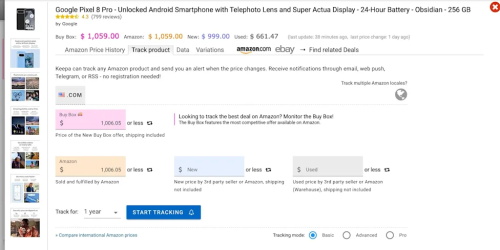
Use public price-tracking tools such as Keepa or CamelCamelCamel to view historical pricing trends and establish your own psychological baseline. Simon-Kucher’s research suggests that when consumers do not understand “why” prices change, frustration becomes the default response. Your personal benchmark is a defense against that frustration.
2. Create a Mandatory “Shopping Cart Cooling-Off Period”
Resist the urgency created by algorithms through messages like “Only 2 left” or “Prices may change in 15 minutes.” Establish a 24-hour rule: leave non-essential purchases in your cart for one full day before deciding.
Vomberg and colleagues found that ADP extends consumer price-search behavior. Use that uncertainty to your advantage and allow yourself more time to think.
3. Compare Across Platforms to Break Information Bubbles
Do not rely solely on one platform’s built-in comparison tools. Intentionally include fixed-price retailers such as supermarket house brands, Costco, or Aldi as reference points. HyperFinity’s survey showed that 88% of consumers consider “getting the best price” important — but that is only possible when independent comparisons exist.
4. Practice Regular “Data Fasting”
Clear browser cookies and use private browsing modes while searching for prices to reduce platforms’ ability to estimate your willingness to pay.
A February 2026 survey by Talker Research found that “surveillance pricing” was a major turnoff for most Americans. The less behavioral data algorithms capture about you, the less precise their pricing profiles become.
5. Use Collective Price-Memory Communities
Join public transparency communities such as Reddit’s r/dynamicpricing or consumer forums hosted by Which?. These communities increasingly function as informal regulatory networks that help restore information symmetry.
If You Are a Brand or Pricing Decision-Maker
1. Explain the Logic Instead of Pursuing Total Transparency
Complete transparency is often unrealistic because it may expose competitive strategy. However, consumers still need to understand why a price exists.
Simon-Kucher’s findings clearly indicate that cost explanations alone do not improve acceptance unless paired with a compelling value narrative. For example, explaining that “current prices reflect real-time inventory and logistics costs” is more effective than remaining silent.
2. Build “Fairness Guardrails” Into Algorithms
Set boundaries that pricing systems cannot cross: daily price fluctuation limits, loyalty protections for long-term customers, and frozen pricing periods for essential goods.
HyperFinity’s research emphasized that supermarkets and retailers selling essential household products must be especially cautious, because any perception of exploitation can severely damage trust and loyalty.
3. Preserve “Human Moments” at Critical Touchpoints
Offer human review channels for pricing disputes in customer service, returns, and institutional procurement scenarios.
The Amazon Business procurement examples demonstrate that when algorithms interact with institutional buyers, the absence of human oversight can create extreme distortions and reputational damage.
4. Exchange Predictability for Loyalty
Alongside dynamic pricing, provide fixed-price subscription or membership options.
This is not simply a recommendation for a specific business model. It is a response to a clear market signal: after years of price volatility, consumers increasingly view predictability itself as a form of value.
5. Ask This During Every Pricing Decision: Are You “Withdrawing” or “Depositing”?
The Sogang University study identified price transparency as a must-be attribute, meaning it is the minimum requirement for trust rather than a bonus feature.
Every time an algorithm adjusts prices, ask whether the adjustment is withdrawing from or depositing into the brand’s “trust account.” Once withdrawals become too frequent and consumers enter a state of fairness fatigue, they quietly leave.
Conclusion: Patience Is a Finite Resource
Algorithms can calculate your willingness to pay. They can predict your demand elasticity for coffee on rainy days. They can analyze your browsing history to estimate your price sensitivity.
But they cannot calculate how much patience you still have left for a brand — and ultimately, that patience is yours to decide.
Today’s consumers are not simply waiting for cheaper products. They are waiting for a shopping environment that does not require constant vigilance, endless price comparisons, or anxiety about overpaying.
At its core, fairness fatigue is about a loss of control. And the solution — whether you are a consumer or a business — is to reclaim the power to define what “fairness” actually means.
Frequently Asked Questions
1. What is the difference between dynamic pricing and surge pricing?
Dynamic pricing is a broad pricing strategy where prices change based on factors like demand, inventory, timing, or user behavior. Surge pricing is a specific form of dynamic pricing commonly used in transportation and delivery services during periods of unusually high demand.
2. Can algorithms legally charge different customers different prices?
In many countries, personalized pricing is legal if it does not violate anti-discrimination laws. However, regulators are increasingly scrutinizing algorithmic pricing systems, especially when companies use behavioral or personal data without sufficient transparency.
3. What industries face the greatest backlash risk?
Essential-service sectors such as groceries, food delivery, transportation, and public procurement face particularly high trust risks because consumers view these categories as necessities rather than optional luxuries.
References
- HyperFinity. (2026). UK Consumer Attitudes toward Dynamic Pricing in Retail and Grocery. Retail Technology Innovation Hub. (N=2,000 UK consumers).
- Simon-Kucher. (2026). US Consumer Affordability and Tariff Pulse Study 2025. Simon-Kucher & Partners. (N=5,054, aggregated February–December 2025).
- Institute for Local Self-Reliance. (2025). The Amazon Business Pricing Disparity Report: Public Procurement and Algorithmic Cost Swings. ILSR. (Case study data from City of Boulder, Denver Public Schools, and West Virginia school districts).
- Gartner. (2024, December 16). Marketing Survey: Consumer Sentiment on Dynamic Pricing and Brand Trust. Gartner Newsroom. (N=global consumer panel; 68% reported feeling taken advantage of).
- Thompson, J., & Wilson, R. (2024). Dynamic Pricing Mechanisms and Repeat Purchase Behavior: A Mixed-Methods Study. (Quantitative survey N=300 US consumers; 15 in-depth interviews; 2 focus groups).
About the Author
Caleb Morgan is a behavioral economics analyst focused on consumer psychology, digital decision-making, and online market behavior. He studies how cognitive biases, pricing strategies, choice architecture, and user experience design affect the way people evaluate products and make purchasing decisions.
His writing translates academic research and real-world business practices into practical insights about consumer behavior in digital markets.
Editorial Transparency Statement
This article is based on publicly available academic studies, industry reports, consumer surveys, and regulatory discussions published between 2024 and 2026. The goal is to provide analytical and educational commentary on dynamic pricing practices and consumer behavior trends. Any company examples referenced are used solely for journalistic and analytical purposes.
Disclaimer
This article is intended for informational and educational purposes only and should not be interpreted as legal, financial, regulatory, or commercial advice.