Slow Websites Convert Better: How Intentional Friction Increases Perceived Product Quality (And Justifies Pricing)
How “slowness” becomes an invisible premium mechanism for high-ticket products — and why most speed optimization efforts may actually dilute your pricing power.
By Caleb Morgan | Updated on May 02, 2026 | 🕓 18 minutes
Key Highlights
- Why can a slower website sometimes increase perceived product quality?
- What is the “Effort Heuristic,” and how does it affect pricing psychology?
- Why do high-ticket products benefit from intentional friction more than low-cost products?
- What is the difference between “strategic friction” and poor user experience?
- How do luxury brands use delay, visual weight, and onboarding friction strategically?
- How can businesses test whether friction improves Average Order Value (AOV) or Customer Lifetime Value (LTV)?
First, Let’s Admit an Awkward Truth
For the past two decades, almost every study on website speed and conversion rates has pointed to the same conclusion: faster is better.
In 2022, Portent conducted an internal study analyzing 27,000 landing pages across 20 websites, covering 100 million page views and 5.6 million sessions. The study found that B2B websites loading within one second converted at three times the rate of sites loading in five seconds. For B2C e-commerce, the gap was 2.5 times. Yottaa’s 2025 Web Performance Index, based on 500 million visits across more than 1,300 e-commerce websites, reported that once page load times exceeded four seconds, 63% of visitors abandoned the page immediately. Conversion Train cited a 2022 study tracking 16 billion page loads, showing that every one-second reduction in desktop load time increased conversions by 5.6% while reducing bounce rates by 11.7%.
These numbers are substantial. The sample sizes are massive, and the conclusions are remarkably consistent. But the blind spot is equally obvious: the categories covered in these studies — B2C consumer goods, travel booking, B2B lead generation, local services — are almost entirely “efficiency-sensitive” environments. Users arrive with a clear task and want to solve it as quickly as possible.
But what if you are not selling efficiency?
What if you are selling identity, exclusivity, craftsmanship, or a high-priced decision that requires reflection?
In those situations, “instant loading” may not be an advantage at all. It may function as a subtle signal of reduced value.
Why the Human Brain Mistakes “Effort” for “Value”
In 2004, a classic study published in the Journal of Experimental Social Psychology introduced the concept of the Effort Heuristic. Participants were told that a poem took either 18 hours or 4 hours to write, or that a painting took either 26 hours or 4 hours to complete. People consistently rated the “high-effort” works as higher in quality and monetary value. The original experiments involved 144 and 66 American undergraduate students, respectively, with effect sizes around d = 0.33.
But the more interesting part came later.
In 2023, Ziano and colleagues published a preregistered replication study in Collabra: Psychology using a much larger sample of 1,405 U.S. participants recruited through MTurk and Prolific. They attempted to replicate Kruger et al.’s original findings and produced mixed results. The researchers successfully replicated the effects for perceived quality and liking, but failed to replicate the monetary value effect. In other words, effort still made people think something was better, but not necessarily worth paying more for.
Ironically, this imperfect replication offers a more nuanced insight:
Friction increases perceived quality, but it does not automatically translate into willingness to pay.
That distinction matters enormously.
If you believe simply slowing down your website will magically increase revenue, you will probably be disappointed. But if delay is embedded within a broader narrative of craftsmanship, exclusivity, seriousness, or intentionality — if the user feels “this is worth spending time on” — then friction can become a supporting lever for premium pricing.
Another related mechanism is Processing Fluency. In 2004, Reber, Schwarz, and Winkielman argued in Personality and Social Psychology Review that experiences processed fluently tend to generate positive emotions and favorable judgments. Later, Shen, Jiang, and Adaval demonstrated in the Journal of Consumer Research that processing fluency could shape product evaluations through assimilation and contrast effects.
These findings are highly relevant in fast-moving consumer contexts, but the inverse implication is discussed far less often:
When a product is high-involvement, high-uncertainty, and high-priced, excessive fluency may subconsciously signal mass production, low barriers to entry, or insufficient seriousness.
Put differently: if your product costs $5,000, but the information acquisition experience feels as frictionless as ordering a cup of coffee, the brain experiences subtle cognitive dissonance.
“How can something this expensive feel this easy?”
Friction Is Not a Single Dimension of “Slowness”
When people hear “make your website slower,” they often imagine technical incompetence or broken infrastructure. But friction operates across multiple layers, and separating them matters.
Temporal Friction
This is the most obvious form: loading animations, cinematic transitions, intentionally heavy media assets, and deliberate pacing.
Some luxury watchmakers and jewelry brands use immersive videos, unconventional navigation systems, and visually dense interfaces not because they lack engineering talent, but because instantaneous loading would undermine the brand atmosphere. That sense of “weight” and ceremonial entry is part of the experience itself.
Cognitive Friction
This involves controlling information density and slowing comprehension in strategic ways.
Many high-ticket B2B SaaS companies do not immediately display pricing. Instead, they guide visitors through a value-discovery process involving case studies, ROI calculations, and use-case exploration before revealing costs.
This is not simply about making things difficult. It is about helping users build a sufficiently large mental account so that the eventual price feels psychologically coherent.
Behavioral Friction
This includes additional confirmations, intentional clicks, qualification forms, onboarding questionnaires, or gated access.
In 2026, Wovly.ai analyzed 251 real-world founder case studies and documented a revealing example. One SaaS founder initially allowed completely frictionless signups, attracting 1,000 registrations but converting only 23 paying customers — a 2.3% conversion rate.
The founder later introduced two additional friction points: requiring a work email address and adding a short onboarding questionnaire.
Total signups collapsed from 1,000 to 400.
But paying customers increased from 23 to 41.
Conversion rates jumped from 2.3% to 10.25%.
The total user count fell dramatically, yet the company’s unit economics became significantly healthier.
This was not literally a “slow website” example, but it reflected the same underlying logic: strategic friction can filter for higher-intent customers.
Real-World Cases That Are Messy — And Therefore More Useful
I prefer examples with ambiguous or mixed outcomes because they resemble actual business reality more closely than simplistic success stories.
Superhuman’s Waitlist Strategy
The email client Superhuman is often celebrated as a textbook case of friction creating premium perception.
During its early growth phase, the company did not offer instant access. Instead, users joined waiting lists and frequently underwent high-touch onboarding and manual screening.
The result was strong engagement, unusually loyal communities, and high conversion quality.
But the less discussed side is equally important:
The strategy also alienated large numbers of users unwilling to wait, and it was largely ineffective for mainstream audiences outside early adopters. Its success depended heavily on the product already generating exceptional word-of-mouth momentum.
If the product had been mediocre, the waiting period would merely have amplified disappointment.
Robinhood’s Viral Waitlist
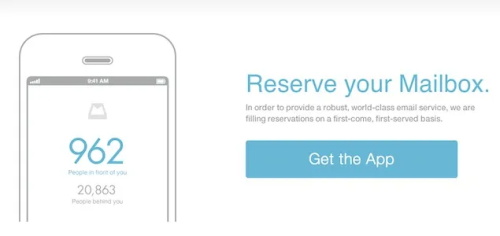
Before launch, Robinhood accumulated nearly one million users on its waitlist by gamifying anticipation. Users could see their queue positions and move upward by inviting friends.
The strategy undeniably created enormous publicity and viral momentum.
But the outcome was still mixed.
Many users signed up primarily for social participation or speculative curiosity rather than genuine long-term engagement. Actual activation rates and retention metrics were never publicly disclosed.
In this case, the waitlist functioned more as a branding event than as a durable conversion mechanism.
The “Heavy Media” Paradox in Luxury E-Commerce
The luxury retail sector offers perhaps the most widespread real-world example.
In 2024, Shinola reportedly improved page loading speeds by roughly one second through automated image compression and achieved measurable UX improvements.
But that improvement highlights a larger truth:
Luxury brands have historically tolerated — and often intentionally embraced — slower, heavier websites.
High-resolution imagery, fullscreen video, and non-standard interactions naturally reduce performance speed, yet the industry did not collapse as a result.
Why?
Because their target audiences evaluate “experience density” differently from mass-market shoppers.
Of course, even luxury brands face limits. Blue Aspen Marketing’s 2025 data showed that every 0.1-second improvement in luxury page load speed still increased conversions by 3.6%.
That means luxury websites are not immune to speed optimization. Rather, their acceptable delay threshold is significantly higher than that of fast-moving consumer categories.
The common thread across all these examples is simple:
The effectiveness of friction depends heavily on category, audience stage, and the actual value of the product itself.
There is no universal formula where “slow equals premium.”
The Boundary Conditions: When Slowness Becomes Self-Destruction
If you sell $29 T-shirts, $9.99 subscriptions, or emergency local repair services, you should probably ignore everything in this article.
Yottaa’s data is brutal: once load times exceed four seconds, more than 60% of visitors leave immediately.
In those contexts, slowness is not a premium signal. It is simply sludge.
Strategic friction only works within specific boundaries.
Category Boundary
The product must involve high consideration, uncertainty, emotional investment, or identity signaling.
When purchases function as self-expression or social signaling, consumers often require ritual, gravity, or deliberation to justify the price psychologically.
User Journey Boundary
Friction belongs in the evaluation stage, not the transaction stage.
Potential customers may tolerate friction while building conviction and understanding value. But once they are ready to buy, additional obstacles become destructive.
Adding friction to checkout is like placing roadblocks directly in front of the cash register.
Technical Boundary
Slow does not mean broken.
Portent’s research found that B2C conversion rates at ten-second load times were dramatically lower than at one second, although the study also acknowledged smaller sample sizes and higher uncertainty in the ten-second range.
This means “controlled delay” must remain inside the user’s patience threshold, while core functionality remains stable and responsive.
Cultural Boundary
Different markets interpret waiting very differently.
In some cultures, delay implies exclusivity or prestige. In others, it signals incompetence.
If your primary audience is in East Asia, tolerance for inefficiency is often lower than among certain Western luxury consumer segments.
A Practical Framework for “Friction Calibration”
If you operate in a high-ticket category, the goal is not to randomly slow things down. The goal is to calibrate friction intentionally.
Step 1: Pricing Diagnosis
Is your average selling price substantially above the industry average — perhaps 50% higher or more?
If not, this strategy is probably inappropriate.
Low-priced products compete primarily on efficiency, convenience, and accessibility rather than meaning or ritual.
Step 2: Friction Mapping
Map the entire customer journey and identify three specific areas:
- Product pages: Can users skim everything within three seconds? If so, consider adding more visual depth, interaction weight, or immersive storytelling that encourages deliberate engagement.
- Pricing presentation: Do you reveal prices immediately? Could you insert a lightweight value-confirmation step first, such as use-case selection or ROI estimation?
- Purchase or trial entry points: Is access instantaneous? Would “Book a Demo” or “Apply for Consultation” better align expectations and allow sales teams to establish value first?
Step 3: Reverse A/B Testing
Traditional optimization asks:
“How can we make this faster?”
You should instead ask:
“At which stage could adding one to three seconds of meaningful delay increase perceived value?”
The key metrics are not click-through rates.
They are:
- Average Order Value (AOV)
- Refund rates
- Customer Lifetime Value (LTV)
- Sales qualification quality
The Wovly.ai example demonstrated exactly this dynamic: signup volume fell by 60%, but paid conversion rates increased by roughly 4.5 times.
You must evaluate friction using downstream business metrics rather than surface-level engagement numbers.
Step 4: Synchronize Copy, Visuals, and Interaction Rhythm
If your interface becomes slower and more deliberate, your messaging cannot continue screaming:
“Instant Access”
“Get Started in 30 Seconds”
“One-Click Setup”
The language must align with the experience.
“Instant Access” may become “Curated For You.”
“Get Started in 30 Seconds” may become “Built to Your Specifications.”
Copywriting, visual density, interaction pacing, and pricing must all communicate the same psychological narrative. Otherwise, users perceive inconsistency and manipulation.
Step 5: Monitor for “Bad Friction”
Define explicit bounce-rate thresholds.
If newly introduced friction points suddenly produce abnormal abandonment spikes — for example, bounce rates exceeding industry baselines by 150% — the friction has crossed from signaling value into creating frustration.
At that point, rollback becomes necessary.
This Is Not Manipulation. It Is Alignment.
There is an important ethical line here.
Intentional friction only works if the product genuinely deserves its price.
If the product is mediocre, friction merely magnifies disappointment, leading to higher refunds, weaker word-of-mouth, and more fragile retention.
Friction should function as a filter, not a trap.
Its purpose is not to deceive the wrong customers into buying.
Its purpose is to attract the right customers — people who prioritize decision quality over decision speed.
Sometimes, making people wait a little is simply helping them convince themselves that something is worth it.
Frequently Asked Questions
1. Does Google penalize slow websites in search rankings?
Yes, website speed is part of Google’s broader page experience evaluation, especially on mobile devices. However, the relationship is nuanced. A slightly slower luxury website with strong engagement and low bounce rates may still perform well if users perceive the experience as valuable.
2. Can intentional friction work for SaaS businesses?
Yes, particularly for enterprise or premium SaaS products. Qualification forms, demo requests, onboarding calls, and guided setup flows can improve lead quality and increase conversion rates among serious buyers.
3. What industries benefit most from strategic friction?
Luxury retail, premium SaaS, private consulting, wealth management, bespoke manufacturing, high-end travel, and identity-driven lifestyle brands tend to benefit the most.
4. What industries should avoid friction-heavy experiences?
Low-cost e-commerce, food delivery, emergency services, commodity subscriptions, local repair businesses, and convenience-based apps usually depend on speed and ease of use.
5. Is there an ideal website loading speed for premium brands?
There is no universal number. The key is maintaining a balance between immersive experience and functional usability. Premium users may tolerate slightly longer load times, but not instability or technical failure.
References
1. Blue Aspen Marketing. (2025). How website speed impacts conversions. Retrieved from industry conversion benchmark reports and luxury retail performance analysis.
2. GetWaitlist.com. (2025). The waiting paradox: Why making customers wait actually increases what they're willing to pay. Behavioral economics analysis of waitlist psychology and exclusivity signaling.
3. Wovly.ai. (2026). We scraped 250+ founder case studies: Here are the 10 GTM strategies that actually work. Analysis of 251 founder case studies from Indie Hackers, Hacker News, and r/SaaS.
4. Yottaa. (2025). 2025 Web Performance Index. Performance analysis across 1,300+ e-commerce websites and 500 million visits.
About the Author
Caleb Morgan is a behavioral economics analyst focused on consumer psychology, digital decision-making, and online market behavior. He studies how cognitive biases, pricing strategies, choice architecture, and user experience design affect the way people evaluate products and make purchasing decisions.
His writing translates academic research and real-world business practices into practical insights about consumer behavior in digital markets.
Disclaimer
This article is provided for informational and educational purposes only and does not constitute legal, financial, UX, CRO, or business consulting advice.
The author and publisher are not responsible for any business losses, conversion declines, technical issues, or commercial outcomes resulting from the implementation of strategies discussed in this article.